
Why Is My Dog Reactive?
Reactivity isn't one thing. It's fear, frustration, or a body that's learned to panic, and once you know which one you're looking at, everything else gets easier.
Quick Links
- Book a session
- Read the glossary
- Browse the Kit
- See our training services
- The Enrichment Library
- The reading shelf
As an Amazon Associate I earn from qualifying purchases. Some links in this note are affiliate links, at no extra cost to you.
"Why is my dog like this?" is usually the first thing I hear, and I get it, I sympathize, it's confusing and exhausting in equal measure. Here's the thing nobody tells you up front: there isn't one answer. ReactivityAn outsized response, such as barking, lunging or spinning, to an everyday thing that most dogs pass without comment.Read more → is a huge spectrum, and a big chunk of what I see is frustration-driven, but fear and over-arousalA level of excitement high enough that a dog can no longer think clearly or respond to cues.Read more → show up plenty too. The good news is you can actually tell which one you're dealing with, just by watching how your dog responds.
Fear
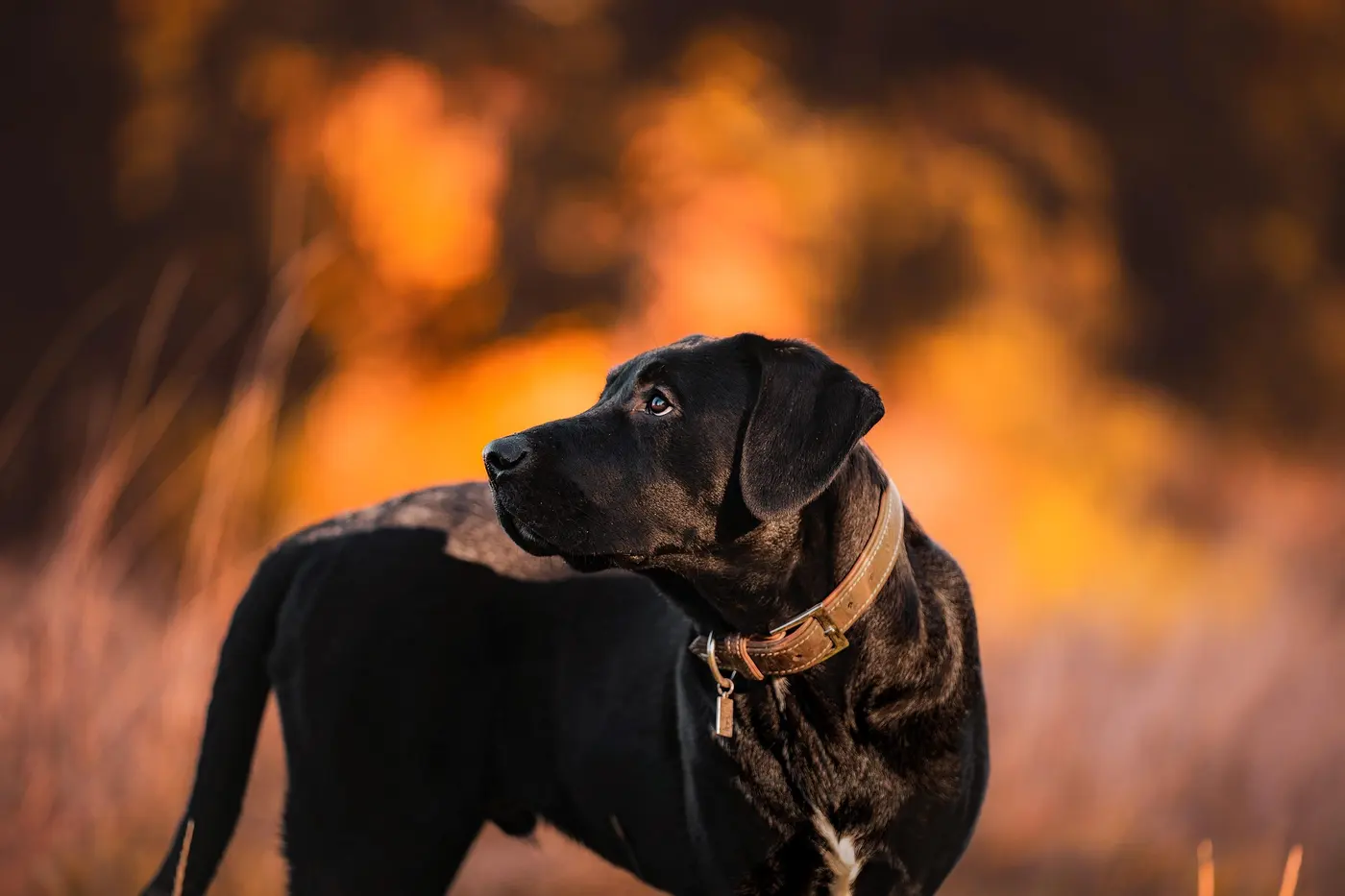
Dogs respond to fear one of two ways, fight or flightThe automatic physiological response to a perceived threat, which prepares an animal either to escape it or to confront it.Read more →, same as people, and some dogs just have more confidence than others. A more confident dog will go check out the scary thing to try to make it go away. A less confident one will try to put as much distance as possible between themselves and the threat, often by barking and carrying on to scare it off.
Here's the reframe that matters: that barking can look exactly like aggression, and it almost never is.
It's a dog desperately trying to create space in a situation they can't control.
Barking is a tool, a stress response, the same one wild animals use to drive off something they can't outrun. Remember your dog is an animal. That instinct doesn't turn off just because they're on a leash in your neighborhood.
Frustration
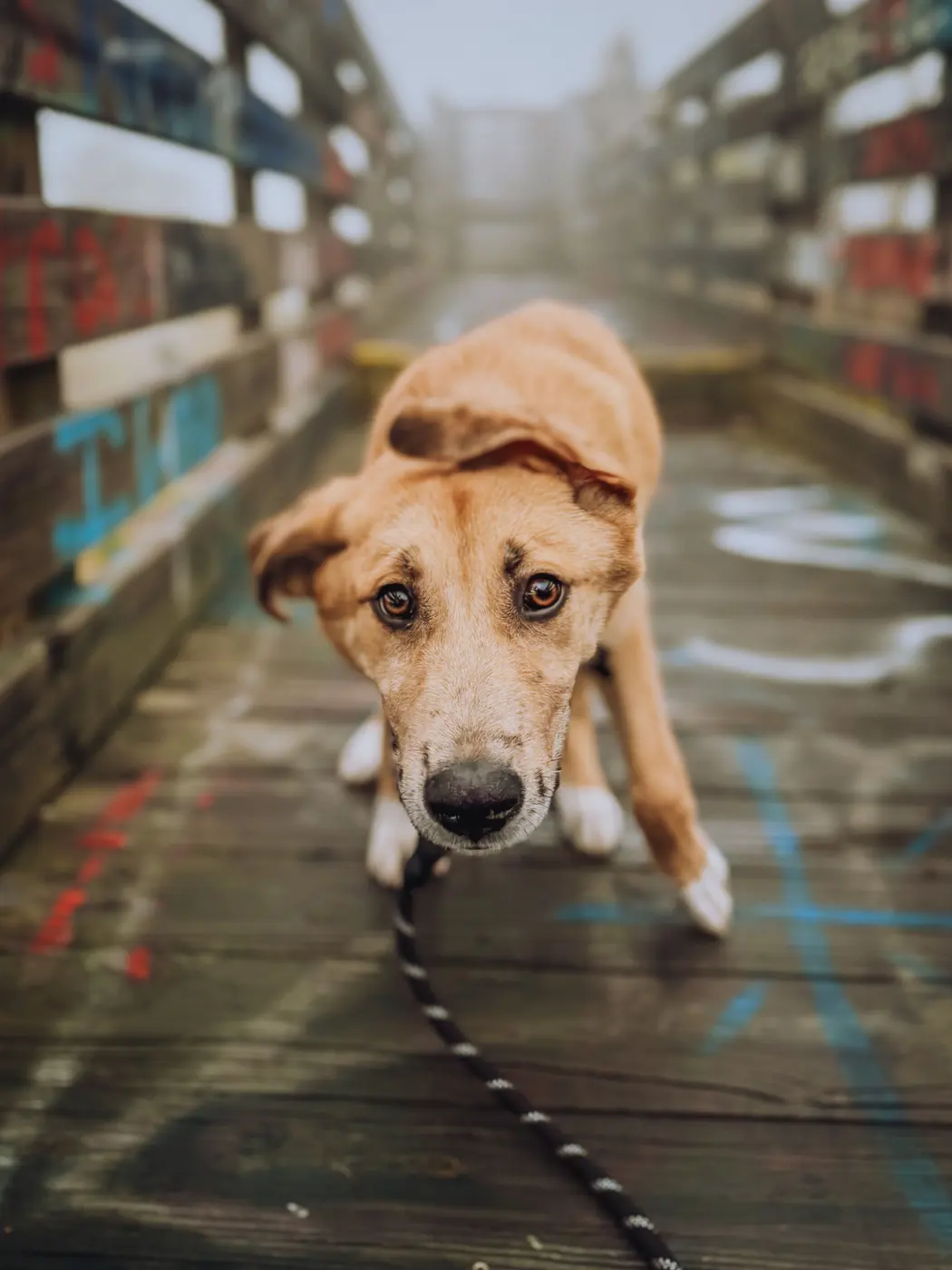
This one has a familiar story. The dog is friendly with pretty much everyone off-leash, maybe at home, maybe in a yard, and has a history of getting to say hi no matter how they behaved getting there. That history builds a cycle: excited, excited, excited, and then no access. Over time the excitement gets edited out entirely, because why bother? Frustration is where it ends up anyway. So instead of getting happy when they spot another dog, they just skip straight to frustrated. What you're seeing is a dog throwing a full hissy fit on the end of the leash because they desperately want something they can't have.
Over-arousal
This is the trickiest one, because it isn't really its own separate thing, it overlaps with frustration or excitement (aggression is a different conversation entirely). What's actually happening: your dog has, at least once, gotten so excited or worked up by a stimulus that their body couldn't handle it. Over time that becomes a conditioned physical stress response, good stress or bad stress, still stress, and your dog can't think their way out of it. You can't counter-conditionChanging how a dog feels about something by repeatedly pairing it with something they like.Read more → a feeling that's happening in the body before the brain even weighs in.
What I do here is prioritize teaching a neutral response instead: your dog doesn't need to be alert to everything nearby. Nothing has to change about your walk just because something's happening near you. This is exactly where Grisha Stewart's BAT 2.0 shines, because you're working with a dog whose body is reacting whether they want it to or not, and the goal is teaching the body that it's safe to stay calm.
Not your fault. Still your responsibility.
I need to be straight with you here: reactivity is not inherently your fault. But sometimes, it is shaped by what your dog has lived through, including things you did without knowing better. I'm not going to tell you it's never your fault if it is, because that doesn't help you. What actually helps is understanding what shapes a dog, so if you've made one of these mistakes, you don't make it again.
Your dog isn't a machine. They're an animal, same as you, and they are absolutely subject to the same psychology every animal is: shaped by the world they live in. That's not a guilt trip. That's just true, and it's also the whole reason training works.
So the next time you catch yourself asking "why is my dog like this," the real question isn't which box to check. It's which story your dog is living, and once you know that, you know exactly where to start.
Common questions
Is reactivity the same as aggression?
No. A reactive dog barking and lunging on the leash can look exactly like aggression, and it almost never is. Most of the time it's a dog desperately trying to create space from something they can't control, or a dog who is frustrated because they want something they can't have. Aggression is a different conversation entirely.
What causes reactivity in dogs?
There isn't one cause. Reactivity is a spectrum, and most of what I see comes from one of three places: fear, where the dog barks to drive off a threat; frustration, where a friendly dog can't get to what they want; and over-arousal, where the body gets so worked up it reacts before the brain weighs in.
Is my dog's reactivity my fault?
Reactivity is not inherently your fault, but it is shaped by what your dog has lived through, sometimes including things you did without knowing better. That isn't a guilt trip. Dogs are shaped by the world they live in, and that is also the reason training works: once you understand what shaped your dog, you know where to start.
Can a reactive dog get better?
Yes. Because reactivity is shaped by experience, it can be reshaped by it, and the starting point depends on what is driving it. Fear and frustration are worked differently, and over-arousal is about teaching a neutral response, so the body learns it's safe to stay calm. Grisha Stewart's BAT 2.0 is built for exactly that.

Kourtenay Dolmos
Founder, Hearth & Hounds · LIMA-Informed · Houston, TXKourtenay is the trainer behind Hearth & Hounds, working hands-on with reactive, anxious, and rescue dogs across Houston. These notes come straight from that everyday work.
Work with KourtenayWhat "threshold" actually means
Trainers throw this word around constantly. It actually means two things at once, and once you can see both, your dog's reactive walks start to make a lot more sense.
ReactivityTrigger Stacking: When Small Stressors Add Up
Your dog's stress doesn't reset to zero between one trigger and the next. It stacks, and eventually something small tips the whole thing over.
ReactivityThe one move for when your dog lunges
Corrections aren't evil, but they're not your move here. When your dog's already over the edge, you want one reliable safety net: the emergency U-turn.
Working through this with your dog?
This is the everyday stuff. If you want a plan built for your dog specifically, that's what we do in person.
Get in touch →