
How to Teach Your Dog “No” (and Why Louder Doesn't Work)
Most houses use one “no” for everything. Split it into two words, make something always follow each one, and your dog can finally tell what you're asking.
Quick Links
As an Amazon Associate I earn from qualifying purchases. Some links in this note are affiliate links, at no extra cost to you.
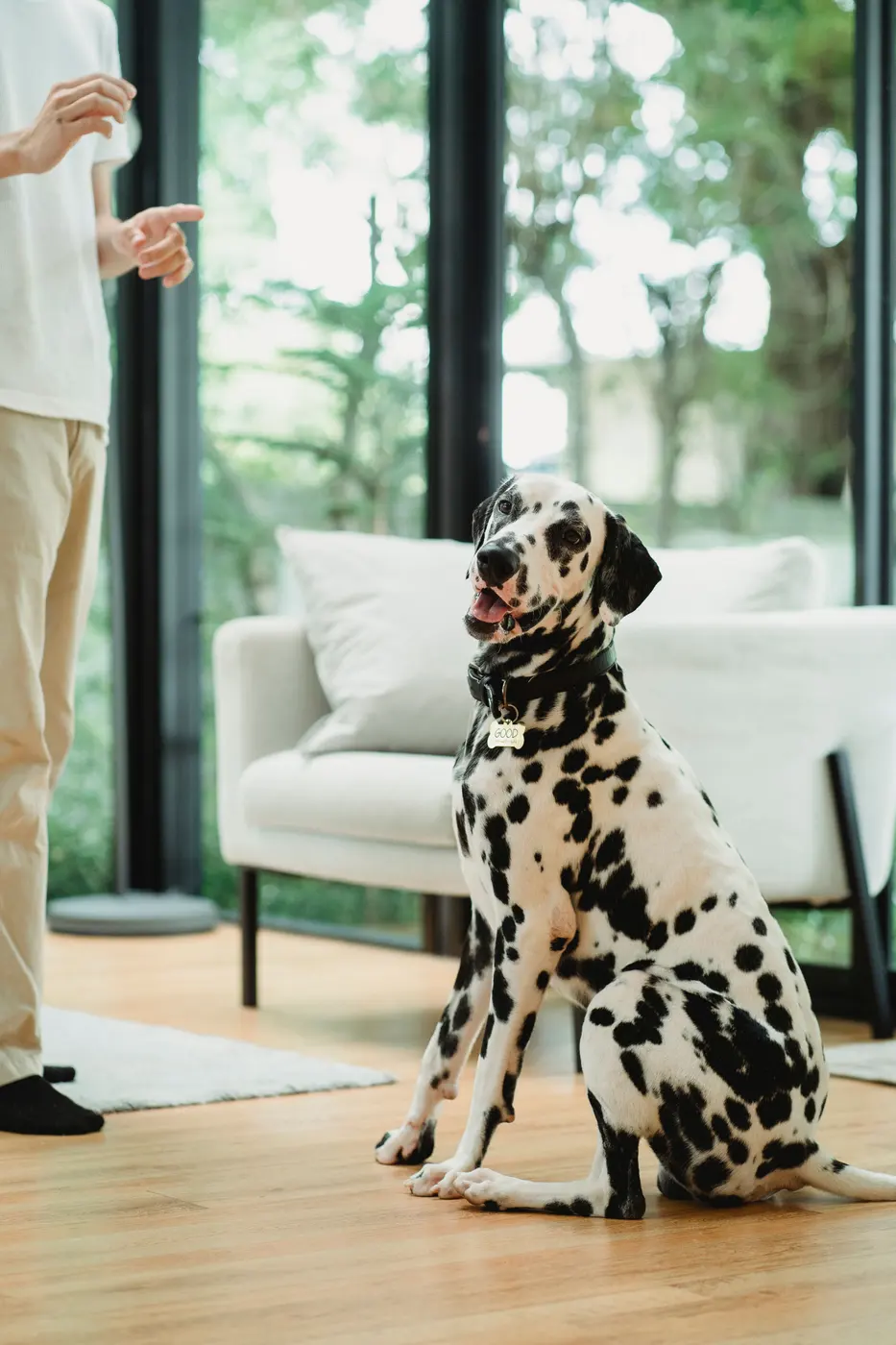
Your puppy has a sock. You say “no.” They take off, and now you're chasing them around the coffee table while they have the best game of their day.
Your dog has probably heard “no” more than any other word in your house, and it may be the one they understand least. That makes sense when you think about it, because almost nobody sits down to actually teach their dog “no.” It just gets said: to the paws on the counter, the shoe, the jumping on guests, and the down when you asked for a sit.
That's one sound being asked to cover four completely different jobs, in roughly the same tone every time. It would be strange if it did mean much to them.
I'm not against using a no with your dog. I use one. It just has to be clear, and it can't be a no with nothing behind it.
Why “no” means nothing until you teach it
It's easy to forget that a child learns “no” without anybody sitting them down to teach it. They hear it constantly, from people who are also pointing, explaining and physically stopping them, and a human brain is built to pick up language that way.
A dog's brain isn't. Your dog learns what a word means the same way they learned what the leash coming off the hook means: by what reliably happens next. Until something does, “no” is a sound like any other.
If you've read the note on marker words, this is the same rule. “Yes” gets its meaning from the food that follows it every time, and “no” is built exactly the same way.
What your dog does pick up is how you said it. In one small brain-scan study, dogs' reward response only showed up when praise words came in a praising voice. The right words said flat didn't do it, and neither did random words said warmly.
Your dog is listening to your tone and watching your body at least as closely as they're listening to the word. So when a sharp “NO!” stops them for a second, what stopped them was most likely the tone and the surprise. A startle wears off, which is why they're back at the counter a minute later.
That's also why saying it louder has never fixed anything. The volume went up, but your dog still had no idea what the word leads to. Raising your voice mostly adds stress: research on ordinary pet dogs counts yelling among the training methods linked to higher stress hormones.
When “no” has been poisoned
Because a word only means what has followed it, a word can also be taught the wrong meaning by accident. Trainers call that a poisoned cueA cue that a dog has learned to ignore or avoid because of what has usually followed it.Read more →: a word your dog has learned to ignore, or to avoid, because of what has usually come after it.
“No” is one of the easiest words in the house to poison, because it gets said so often, in so many moods, by so many people. There are three common ways it happens.
- Nothing ever follows it. A sound that comes up over and over and never leads anywhere gets tuned out, the way you stop noticing the hum of the fridge. Learning research has studied this for decades, and it's a reasonable thing for your dog to learn: a sound that has never predicted anything isn't worth their attention.
- Something unpleasant follows it. If “no” has usually meant being yelled at, grabbed, or scolded, your dog learns that the word means a person is upset with them. You'll see it in how they respond: slowing down, ducking their head, licking their lips, looking away, or keeping their distance from you.
- It turns into a game. Remember the sock? From your puppy's side, “no” was the starting whistle for a chase around the coffee table. A dog who grabs something and runs when they hear the word may well have learned exactly that.
If your house already has a word, keep it, as long as it still works. “No,” “uh-uh,” “nope,” anything is fine. What matters is whether everyone in the house says it the same way and follows it with the same thing.
But if your dog has fully tuned it out, or they cringe or bolt when they hear it, start over with a fresh word. A word with no history is easier to teach than one your dog has already learned to ignore or dread.
What most houses are missing is a second word, because “no” has been doing two separate jobs.
Job one: “wrong answer, try again”
This one lives in training. You ask your dog for something they already know, like a sit, and they offer something else, like a down. They gave the wrong answer to a question, and they need to know that so they can try again.
That's what an anti-markerA word used to tell a dog that the response they just gave was not the one being asked for.Read more → is for. Here's the sequence:
- Ask for the behavior.
- Your dog offers something else.
- Anti-marker: that wasn't it.
- Release cueA word that tells a dog a position or a task is finished and that they are free to move.Read more →: reset, off you go.
- Ask again.
Nobody is in trouble, nothing gets taken away, and your dog isn't left standing there wondering what went wrong. They find out right away that it wasn't that, and they get another chance to be right. The quick second chance is what keeps them trying.
Save it for things your dog already knows. When you're teaching something brand new, skip the anti-marker. A wrong answer just doesn't get paid, and you set up the next rep so it's easier to get right.
One small study found dogs learned a new trick with fewer mistakes when their wrong answers were quietly ignored than when each one was marked. An anti-marker is useful once your dog knows what right looks like and needs help telling the two apart.
Job two: “leave that”
The second job belongs to everyday life. Your dog isn't answering a question here. They're already busy with something: a shoe, something on the sidewalk, your guest's face. What you need now is “stop that and do something else.”
That's an interrupterA cue used in everyday situations to stop a dog in the middle of something and bring their attention back to the handler.Read more →. Mine is usually “leave it,” and sometimes it's a different word picked for that particular dog. There's no treat in the moment. What follows the interrupter is a redirection, and what you redirect to depends on what your dog was trying to do.
If there's a right answer, you point them toward it. If there isn't one, you point them toward the most neutral thing available.
- Chewing a shoe: interrupt, then hand them something they're allowed to chew. They wanted to chew, so give them the right thing to chew on.
- Nose in something on a walk: interrupt, then keep walking. There's nothing on the sidewalk they get to have, so the neutral option is simply moving on.
- Jumping on a guest: interrupt, then ask for four paws on the floor. If they keep going, they lose access to the room for a bit. That consequence has to happen right away and every time, or your dog can't connect it to the jumping.
Redirecting does more than just stopping the behavior, because it gives your dog something to get right. A dog who only ever hears “stop” is left to guess what you wanted instead.
If your dog doesn't know “leave it” yet, the Enrichment Library walks through building it one small step at a time. Treats are part of learning the cue. Once your dog knows it, using it in real life comes with a redirection instead of a treat.
Why you need two different words
I use different words for these two jobs, and I'd recommend you do too. Say the same word for both and it's asking two opposite things.
The anti-marker means “stay here and try that again.” The interrupter means “leave that and go somewhere else.” If your dog hears one word in both situations, they have no way to know which one you mean.
Pick one word for “wrong answer” and a different word for “leave that,” and make sure the same thing follows each one every time.
This is also where houses with more than one person run into trouble. If one of you uses “uh-uh” for a wrong answer and the other uses it to get the dog off the counter, your dog is learning two meanings for the same sound. Agree on the words together, and tell anyone else who spends time with your dog.
A puppy and a well-practiced habit need different plans
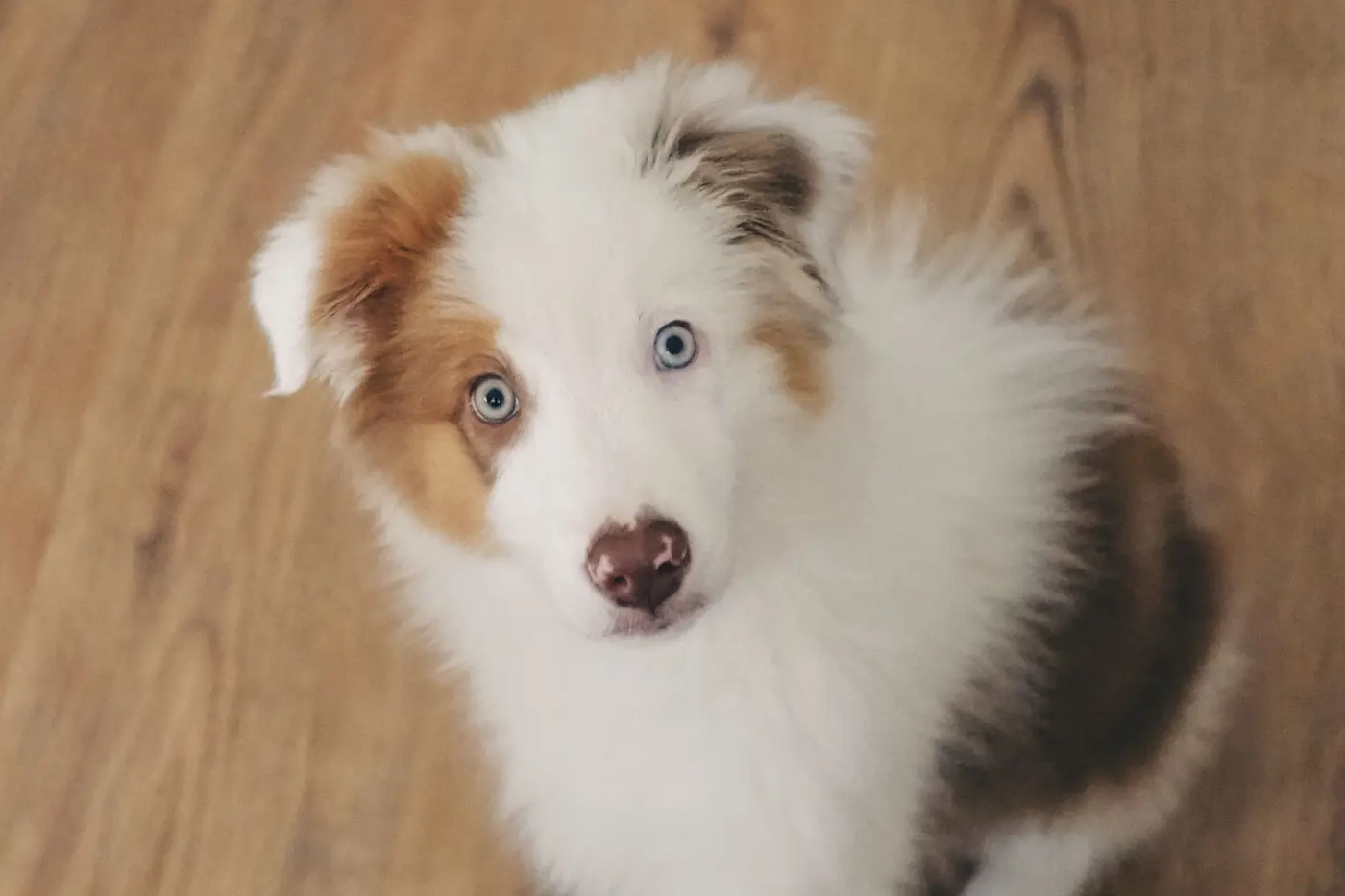
With a puppy who's just starting out, you'll barely need either word. The plan is managementArranging the environment so an unwanted behavior cannot happen, rather than training the dog not to do it.Read more →, so they can't practice the thing you don't want, and paying them well for the thing you do want. A puppy who hasn't built a habit yet doesn't have much to interrupt.
A dog who has been jumping on guests for two years is in a different spot. That habit has been practiced and it has paid off many times, so managing around it isn't enough anymore. It needs actual correction.
Interrupters and anti-markers come into the same plan, and the plan runs slower. It still works. It takes longer, because you're replacing something your dog already does rather than starting from nothing.
Where to start
- Pick your “wrong answer” word. Keep the one your house already uses, unless it's been poisoned.
- Pick a different word for “leave that.”
- Make sure everyone in the house knows which word is which. Write it on the fridge if that helps.
- Practice the anti-marker on a skill your dog already knows, somewhere quiet where a wrong answer costs nothing.
- For the thing your dog does most, decide ahead of time where you'll redirect them: the right answer, or the most neutral option.
Your dog was never being stubborn about “no.” They've been hearing one word asked to mean four things, and once it only has to mean one, they can actually do something with it.

Kourtenay Dolmos
Founder, Hearth & Hounds · LIMA-Informed · Houston, TXKourtenay is the trainer behind Hearth & Hounds, working hands-on with reactive, anxious, and rescue dogs across Houston. These notes come straight from that everyday work.
Work with Kourtenay“Yes” doesn't mean anything to your dog yet
A marker word, a clicker, even “good boy” starts out as noise, the same way “no” does. Meaning is something you build, and it takes less time than you'd think.
TrainingWhy Did My Dog's Training Suddenly Go Backwards?
A dog who could do it last month and can't do it now has almost never forgotten it. Usually one of four things changed, and each one has a fix.
BehaviorWhy your dog is great at home but a mess outside
Spoiler: it isn't stubbornness, and it isn't really even a training problem. Your dog is an animal in a distracting world, and once you get that, a lot of this stops being so frustrating.
Working through this with your dog?
This is the everyday stuff. If you want a plan built for your dog specifically, that's what we do in person.
Get in touch →