
Reading Dog Body Language
What a dog’s ears, eyes, mouth, weight and tail are telling you, the combinations worth knowing on sight, and the signals people most often get wrong.
Has your dog ever barked or lunged at something and you had no idea why? Have you ever seen them lick their lips and thought nothing of it? A client recently told me they had never known a lip lick could mean anything. Most owners have never been shown what to look for.
I have trained dogs professionally since 2020, and most of the dogs I work with are reactive, fearful or anxious. Reading their body language is how I decide when to keep going with a dog and when to give them more space.
Everything here is built on the published research, and where that research is thin, I say so.
Most people can spot a happy dog. Fewer can spot a frightened one.
| Who was watching | Spotted the fearful dog | Spotted the happy dog |
|---|---|---|
| People who had never lived with a dog | About 1 in 3 | About 9 in 10 |
| Dog owners | About 6 in 10 | About 9 in 10 |
| Dog professionals | Over 7 in 10 | About 9 in 10 |
In one study, more than 2,000 people watched short, silent video clips of dogs and said what each dog was feeling. Almost everyone recognized the happy dogs, no matter how much experience they had. Recognizing the frightened dogs depended on how much time a person had spent around dogs.
Reading each part of the dog
A dog’s ears, eyes, mouth, posture, tail, coat, movement and voice each tell you something about how they feel.
| Ears | What it can mean |
|---|---|
| Forward | Interested, alert |
| Relaxed | Calm |
| Out to the side (airplane ears) | Mixed feelings, unsure |
| Pinned back | Worried or frustrated, but also seen in happy dogs |
| Eyes | What it can mean |
|---|---|
| Soft, blinking | Relaxed |
| Hard, fixed stare | Tense, warning |
| Whites showing (whale eye) | Uncomfortable |
| Looking away, head turned | Uneasy, especially with someone unfamiliar |
| Mouth | What it can mean |
|---|---|
| Loose and open | Relaxed |
| Closed and tight | Tense |
| Lip or nose lick | Uneasy |
| Lifted lip | Warning |
| Panting when it is not hot and they have not been exercising | Stress |
| Weight and posture | What it can mean |
|---|---|
| Even | Relaxed |
| Forward, standing tall | Confident, focused, or warning |
| Back, low, crouched | Worried, fearful |
| One front paw lifted | Unsure |
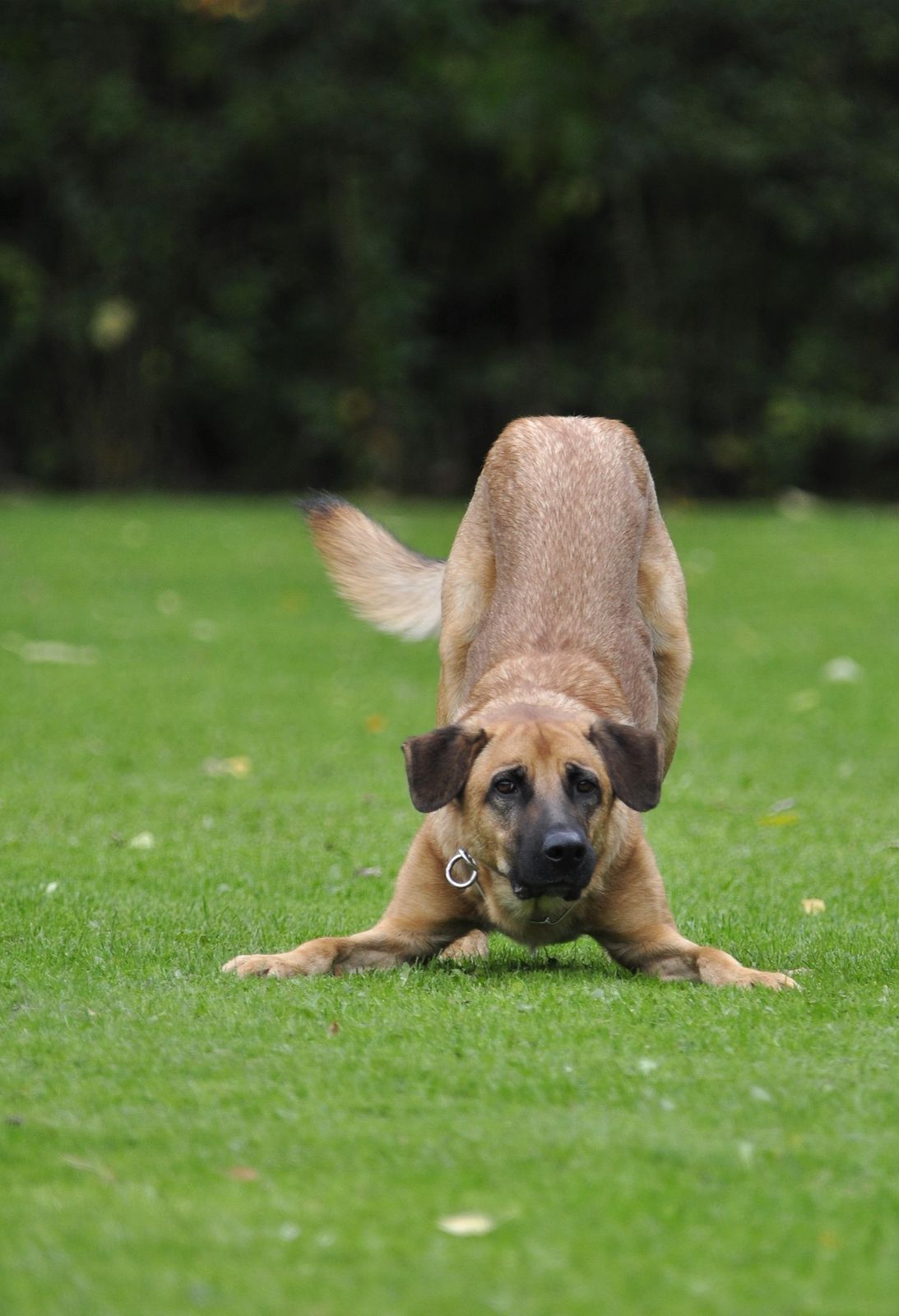
| Play bow | Inviting play, or restarting it |
| Rolling onto the back | Usually a play move during play. Outside play, often worried |
| Tail | What it can mean |
|---|---|
| At its usual height, loose | Relaxed |
| High and stiff | Aroused, tense |
| Low or tucked | Worried, fearful |
| Wagging | Excited or interested, in any mood |
| Loose, wide wag, often moving the hips | Relaxed, friendly |
| Stiff, high wag, small and fast | Aroused and tense, often fixated or about to warn |
| Low wag | Nervous, or mixed feelings |
| Hackles | What it can mean |
|---|---|
| Raised | Aroused, from fear, surprise, stress or aggression |
| Movement | What it can mean |
|---|---|
| Loose and bouncy | Relaxed, playful |
| Slow, stiff or frozen | Tense |
| Moving away | Wants space |
| Trembling | Fear or stress, though cold, pain and illness cause it too |
| Voice | What it can mean |
|---|---|
| Whining | Stress or frustration, and also greetings and wanting attention |
| Growling | A warning, though dogs growl in play too |
| Low, harsh, rapid barking | Alarm or threat, often at a stranger |
| High-pitched barking | Play, or distress when left alone |
Trainers also watch for displacement behaviors, which are ordinary actions that show up at a moment that does not seem to call for them. Researchers link them to tension and mixed feelings.
| Displacement behavior | When it counts |
|---|---|
| Lip or nose lick | There is no food around |
| Yawn | The dog is not tired |
| Shake-off | The dog is dry, often right after something tense |
| Sudden sniffing at the ground | During an approach or a tense moment |
| Sudden scratching | Nothing is itchy |
Why one signal is not enough
Lip licks, head turns, blinks and yawns appear in relaxed, excited and frightened dogs. They become useful when several appear together and you know what is happening around the dog.
In a 2023 study, a stranger walked up to 53 dogs, sometimes calmly and sometimes in a threatening way. When the approach was calm, 94% of the dogs turned their head and 87% blinked. When it was threatening, most still did: 81% and 64%.
How to read a dog in three steps. Because any single signal can mean several different things, these three checks are how you work out which one it means. Use them whenever you’re not sure what your dog is telling you, like on a walk, when someone new comes over, or at the vet.
- 01The whole dog
Check the ears, eyes, mouth, weight, tail and movement together, and look for several signs that agree.
- 02Their normal
Some dogs are naturally still and some lick their lips constantly. Watch your dog when nothing is happening so you can spot a change.
- 03What is happening
Note who is close, what is touching the dog, what just changed, and whether the dog can move away.
Feeling good
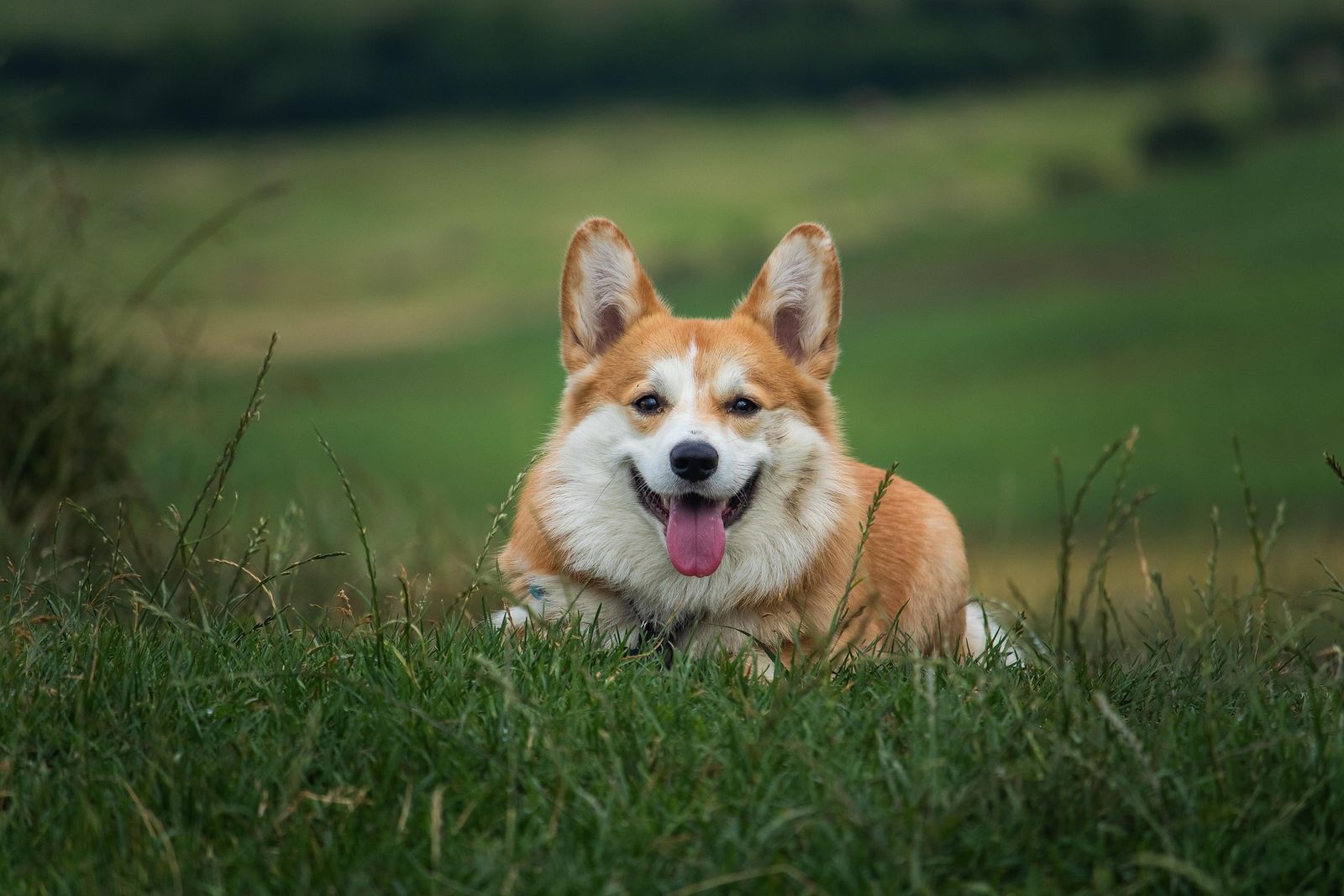
A dog who feels good moves loosely, holds their body in soft curves rather than straight lines, and can stop what they are doing without effort.
| Combination | What you see | Where you usually see it |
|---|---|---|
| Relaxed | Loose body, soft eyes, mouth loose or closed, tail at its usual height | Everyday moments |
| Playful | Bouncy, exaggerated moves, play bows, loose open mouth, taking turns | With a dog or person they know |
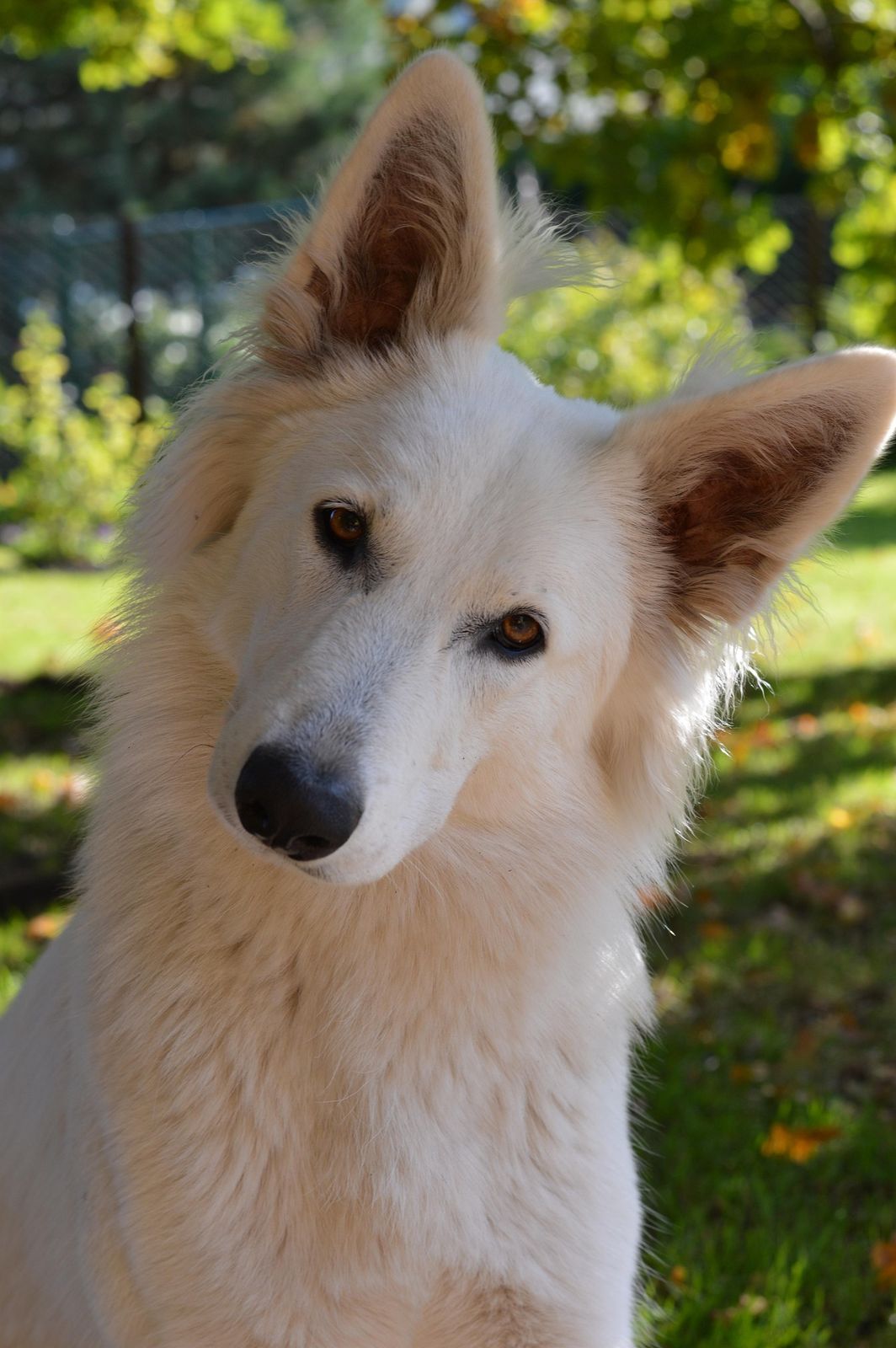
| Curious | Ears forward, nose working, head tilted, approaches but can stop easily | Something new |
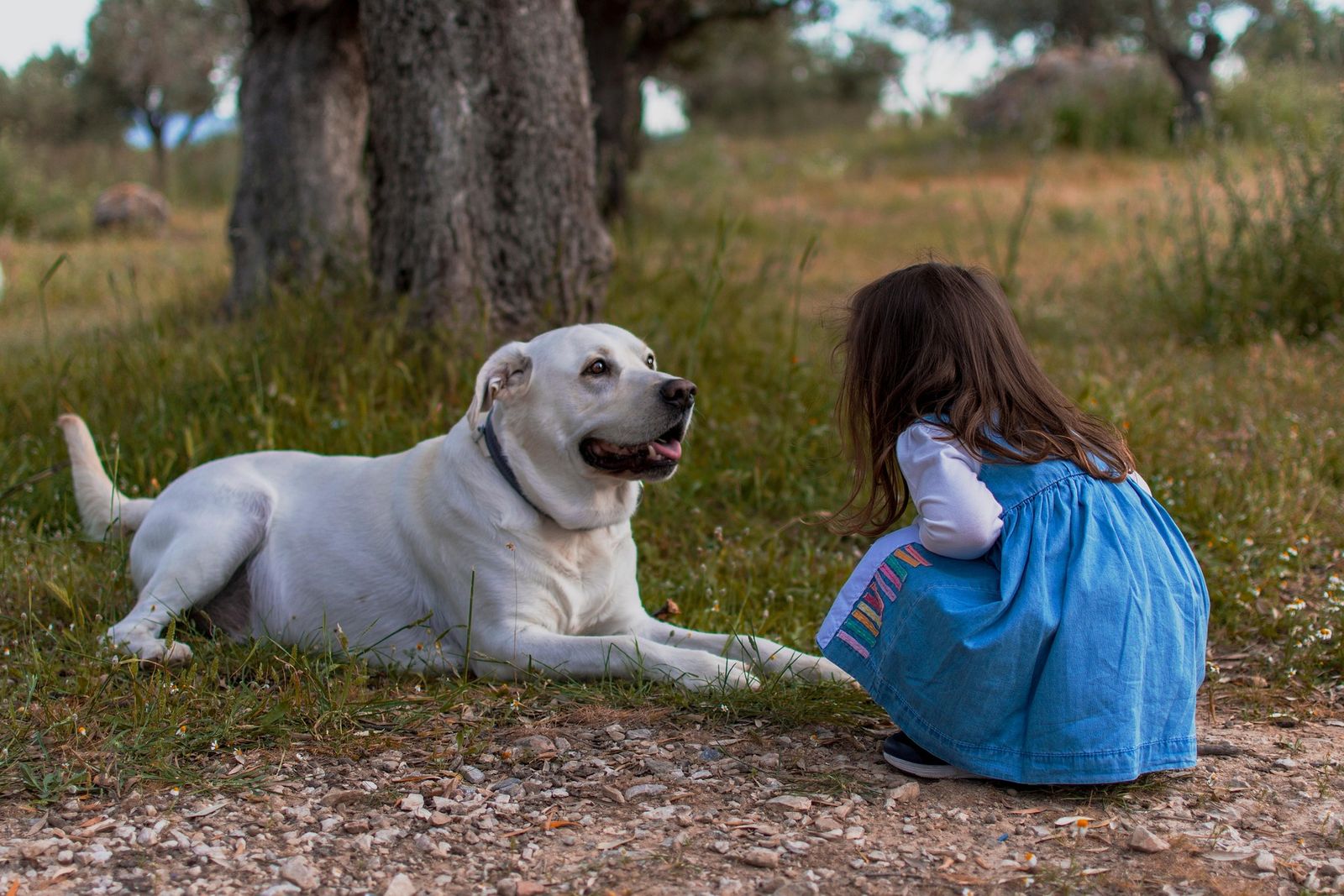
| Engaged with you | Soft eye contact, loose body, follows you, takes food easily | Training and walks |
| Content and settled | Lying on their side or curled up, eyes closed or half shut, slow breathing | Resting |

Feeling worried
A worried dog gets lower and stiller and tries to move away or end the interaction. Because they are quiet, these dogs are often mistaken for calm ones.
| Combination | What you see | Where you usually see it |
|---|---|---|
| Unsure | Weight back, ears half back, stop-start approach, lip lick, head turned away | Something unfamiliar |
| Stressed or anxious | Panting when not hot, pacing, ears back, tail lower than usual, can’t settle, may refuse food | The vet, the car, busy places |
| Fearful | Crouched, tail tucked, ears pinned, whale eye, leaning or moving away, trembling | Something frightening close by |
| Shut down | Very still, head low, won’t engage or take food, looks at nothing | Overwhelmed, with no way out |
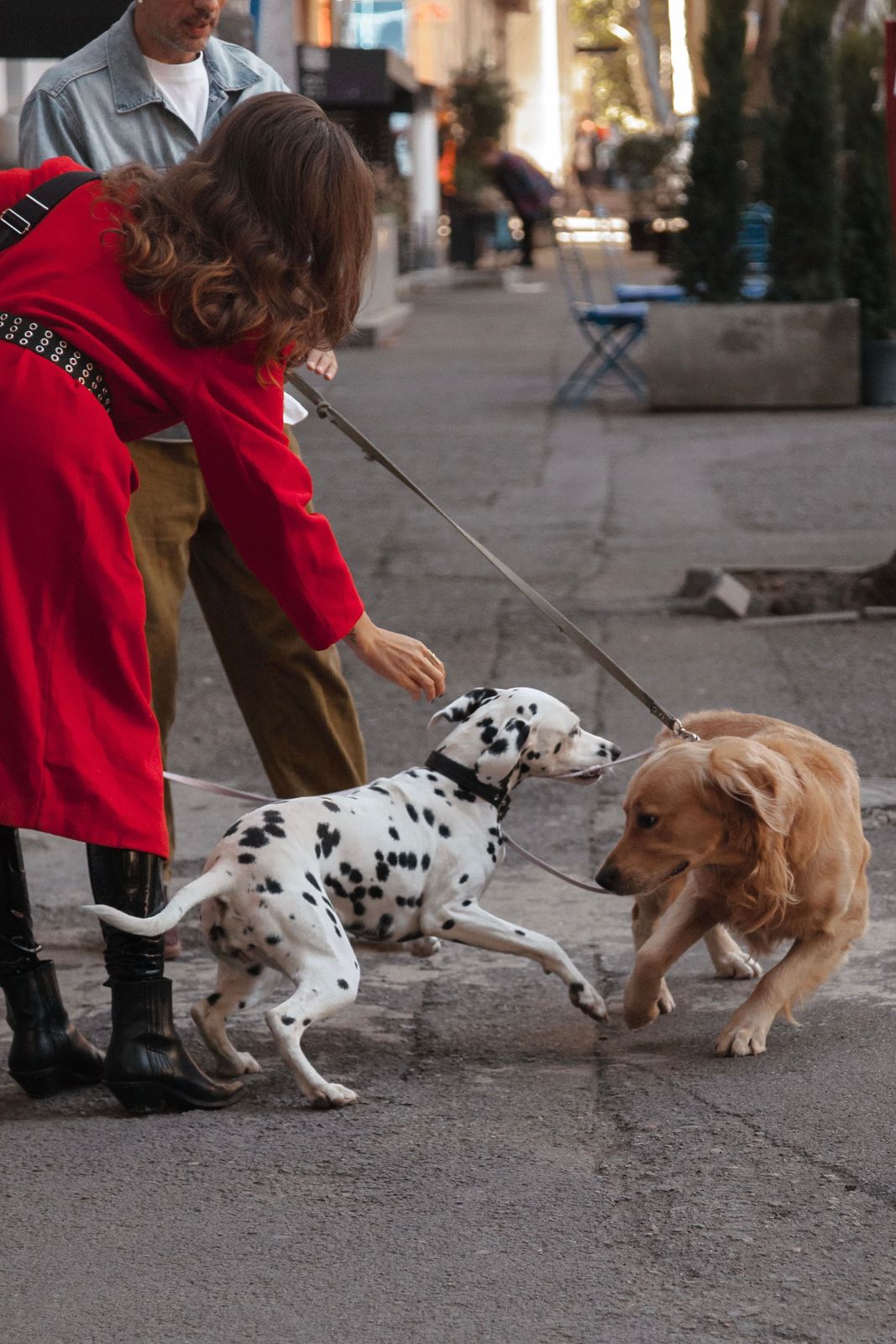
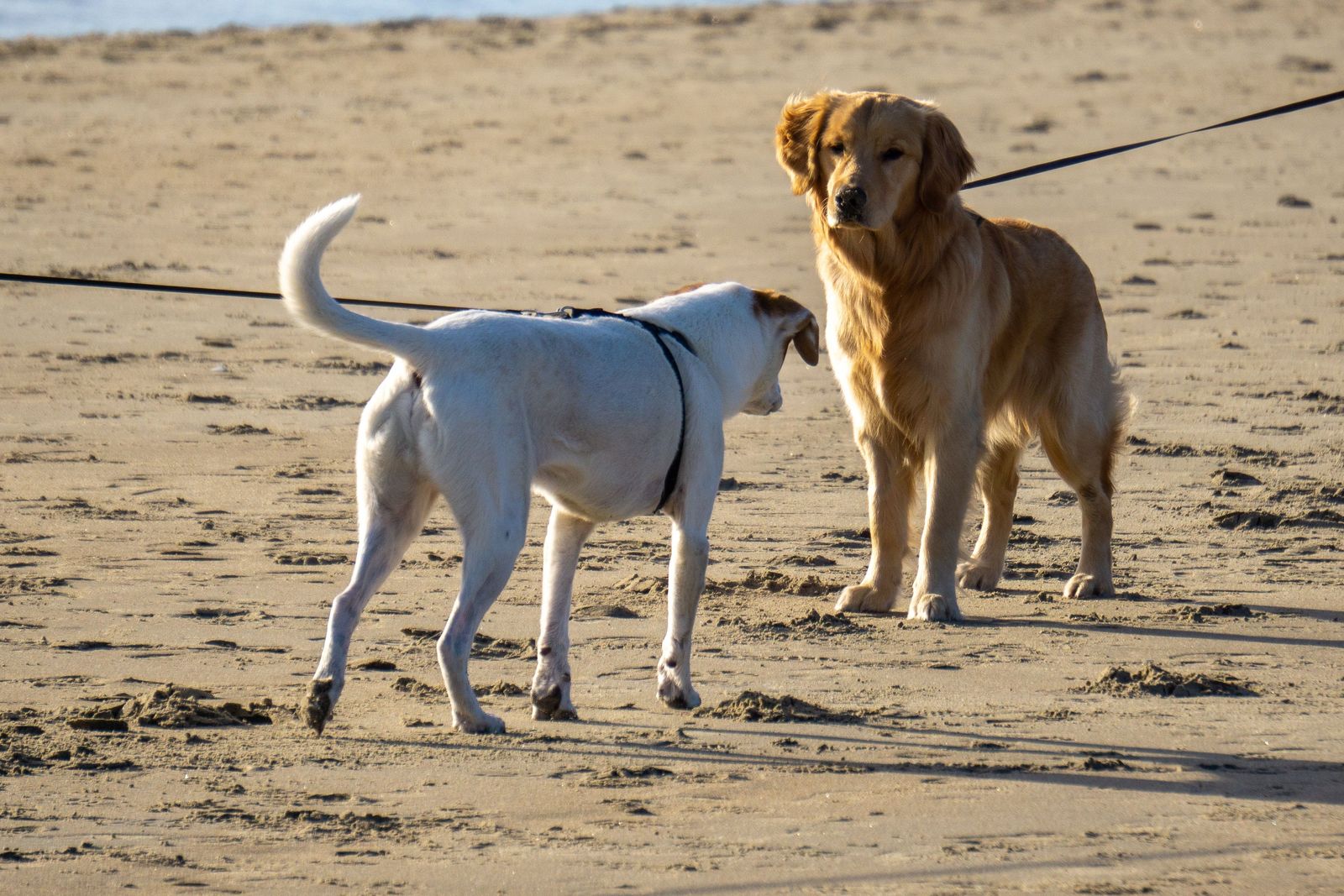
| Appeasing | Low and wiggly, head down, licking toward a face, low fast wag, may roll over. With dogs, a curved approach or turning sideways | Greeting a person or another dog |
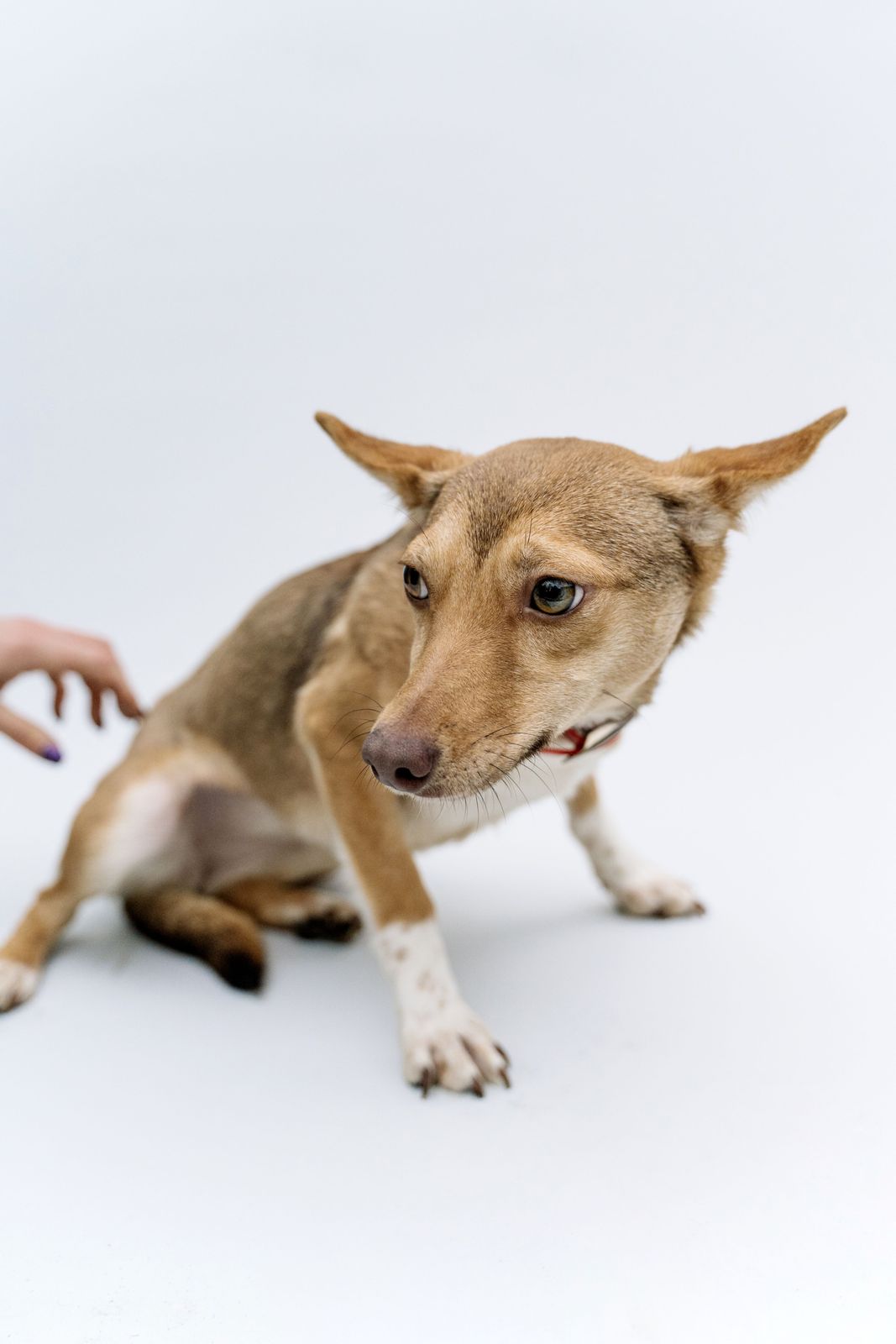
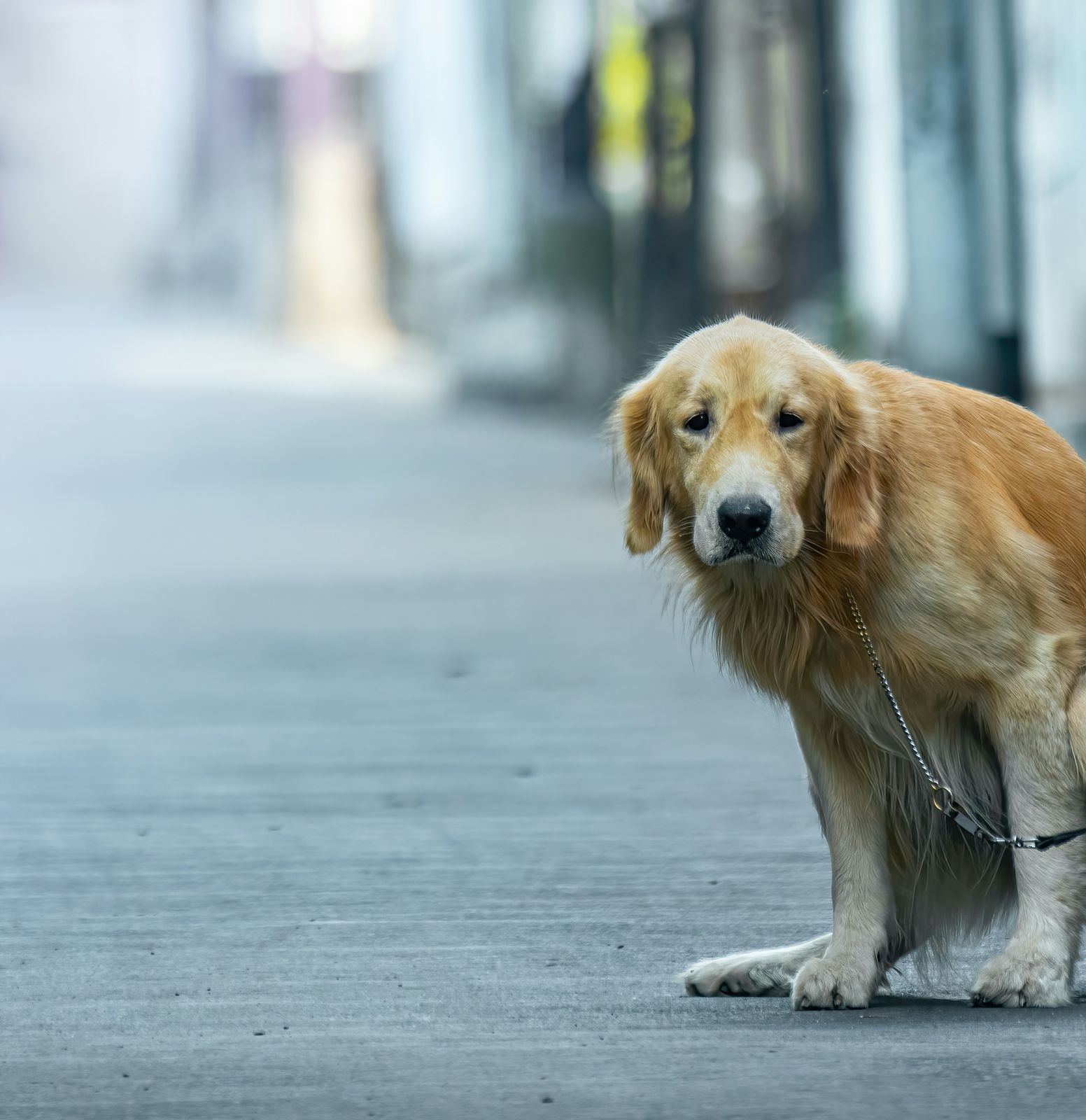
Shut down is the state I worry about most, because owners often read it as good behavior. A dog who has stopped moving, sniffing and taking food usually has no other options left.
Warning signs and aggression
Stiffening, staring, a lifted lip and a growl are how a dog communicates before biting. When you see them, give the dog more space.
| Combination | What you see | Where you usually see it |
|---|---|---|
| Conflicted | High tail with weight back, approach then retreat, sniff then freeze | Wanting and fearing the same thing |
| Warning: back off | Stiffens or freezes, hard stare, mouth closes, lip lifts, growls | Someone too close or touching, or near something guarded |
| Fear-based aggression | Weight back, head low, ears back, lips pulled back, barks or snaps while backing away | Cornered, with no way out |
| Confident aggression | Weight forward, standing tall, ears forward, hard stare, tail high and stiff, moving toward | Guarding, or facing off |
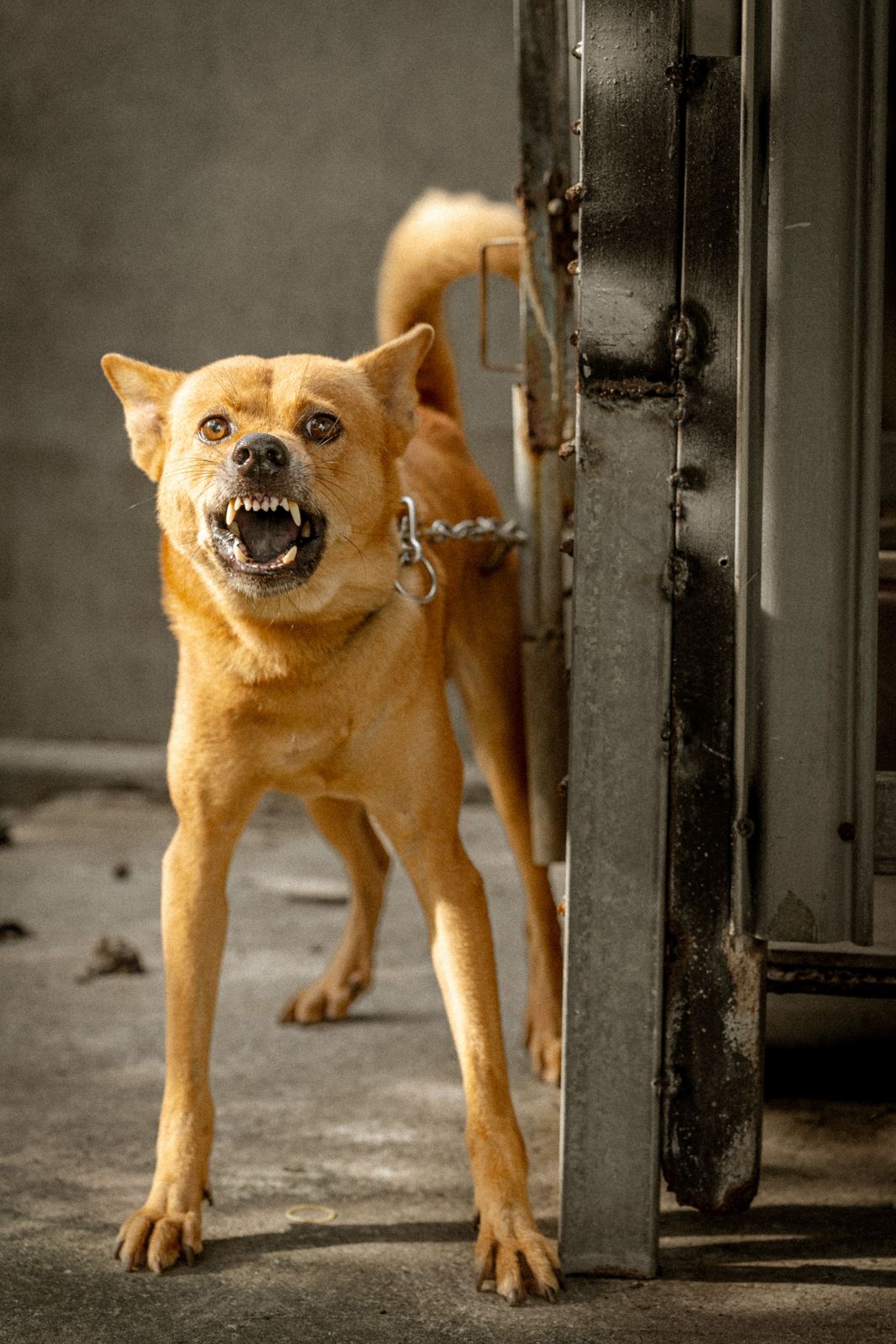
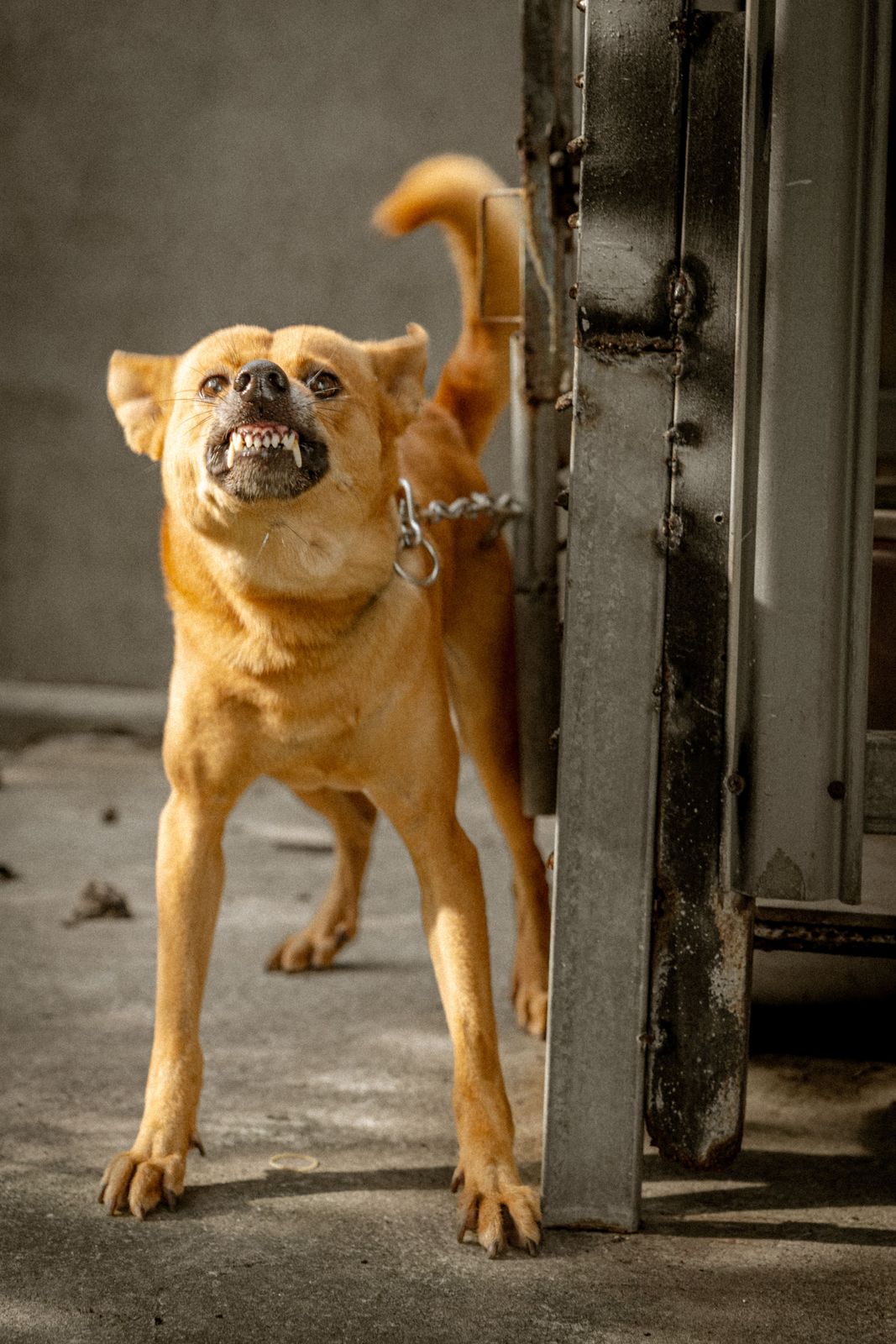
In the first photo, the dog is barking with the mouth wide open, ears pulled out to the side, eyes wide and front legs braced. In the second, the same dog has gone quiet and pulled the lips all the way back into a snarl, with the muzzle wrinkled and the head pulled up and back. Both are warnings from a dog who wants space, and the chain is why this dog cannot take it.
Why I never punish a growl
A growl is information. It tells you your dog is uncomfortable while there is still time to do something about it.
When a growl gets punished, the dog learns that growling gets them in trouble, but nothing about the thing that upset them changes. The fear or discomfort is still there, and the dog has lost a safe way to tell you. The next time, they may skip the growl and go straight to a snap or a bite.
When your dog growls, stop what is happening and give them space. Then treat the growl as a sign that whatever caused it needs work, ideally with a trainer.
Too much energy
Excitement, frustration and fixation can all push a dog into over-arousal, a state where they are too worked up to respond to cues they know well, even when nothing frightening is happening.
| Combination | What you see | Where you usually see it |
|---|---|---|
| Over-aroused | Frantic movement, jumping, mouthing, ignores cues they know, may refuse food | Greetings, play, after being crated or shut in |
| Frustrated | Pulling, whining or barking at something out of reach, trying again and again, may grab whatever is close | Behind a fence, on leash near another dog |
| Locked on | Still, fixed stare, body pointed at the target, ears forward, mouth closed, doesn’t hear you | A squirrel, a cat, another dog |
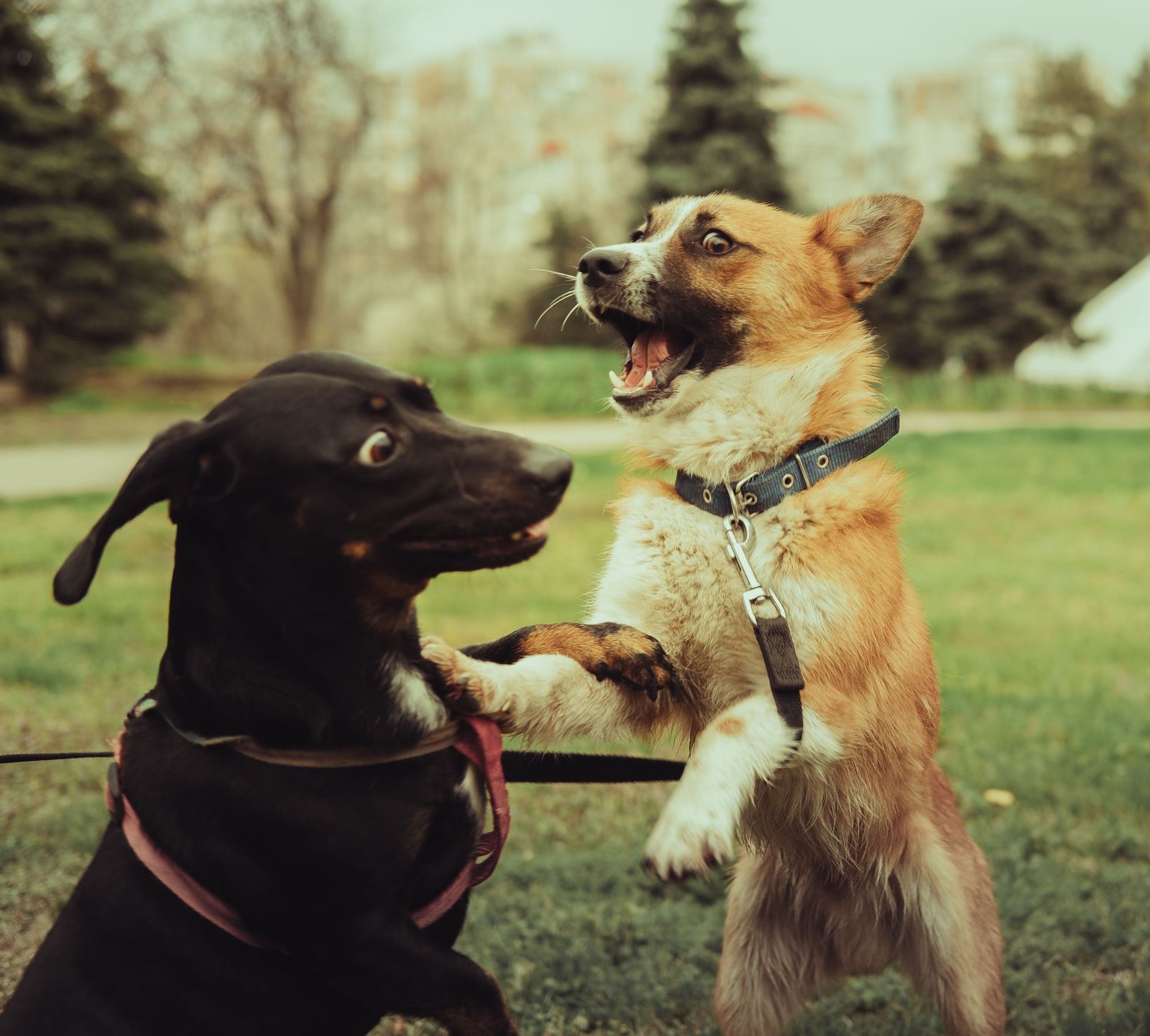
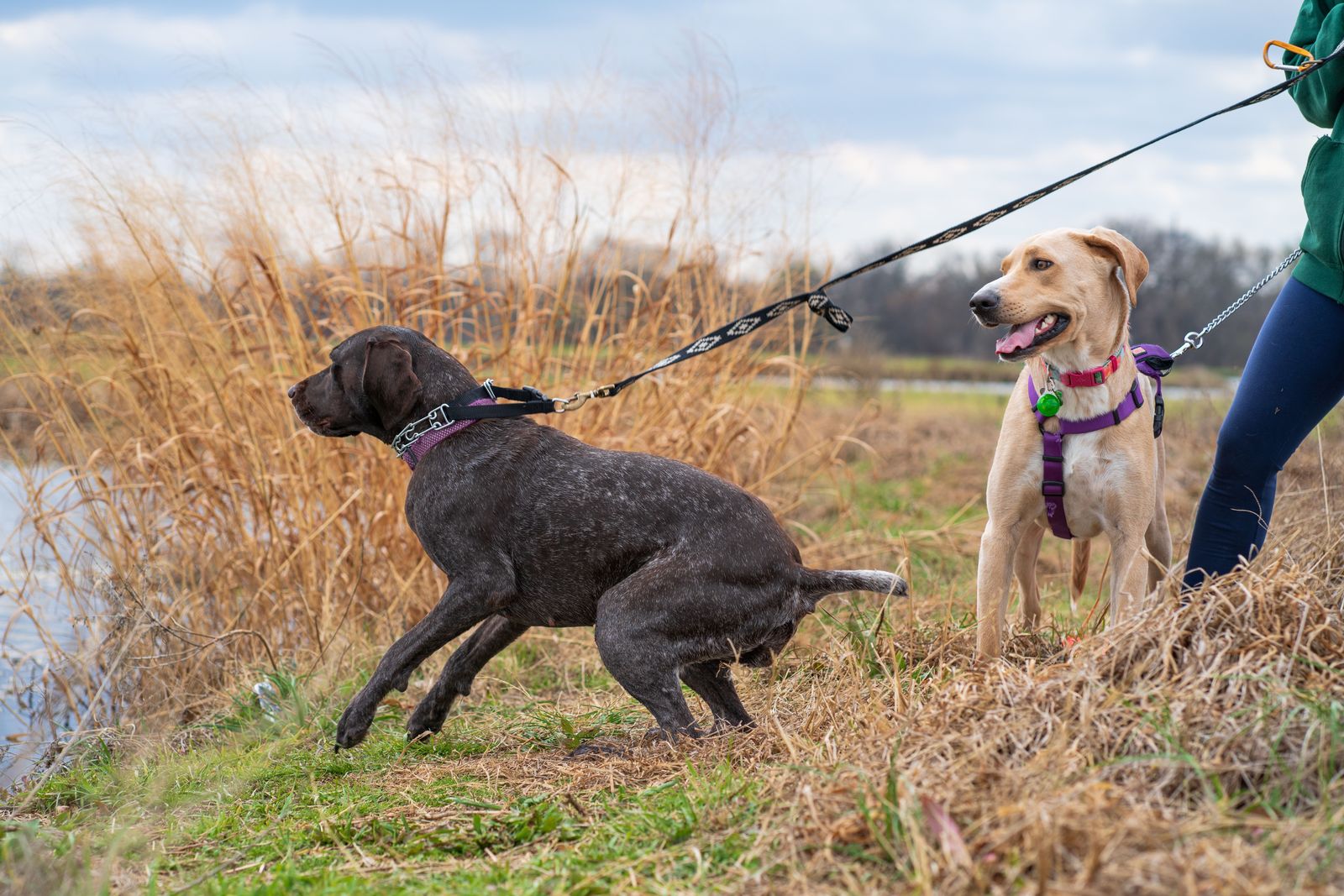
A dog who is locked on can look calm because they are still. Their ears, eyes and body all point at one thing, and they stop responding to you.
Commonly misread signals
Owners often read these four signals wrong.
| Signal | Usually read as | What it more often shows |
|---|---|---|
| The wag | Happy | Arousal or interest. A loose wag and a stiff one mean very different things |
| The guilty look | Guilt | A reaction to your tone or scolding |
| The yawn | Stress, or tired | Many things, including a yawn caught from you |
| Glued to your leg | Affection | Often a dog looking for cover |
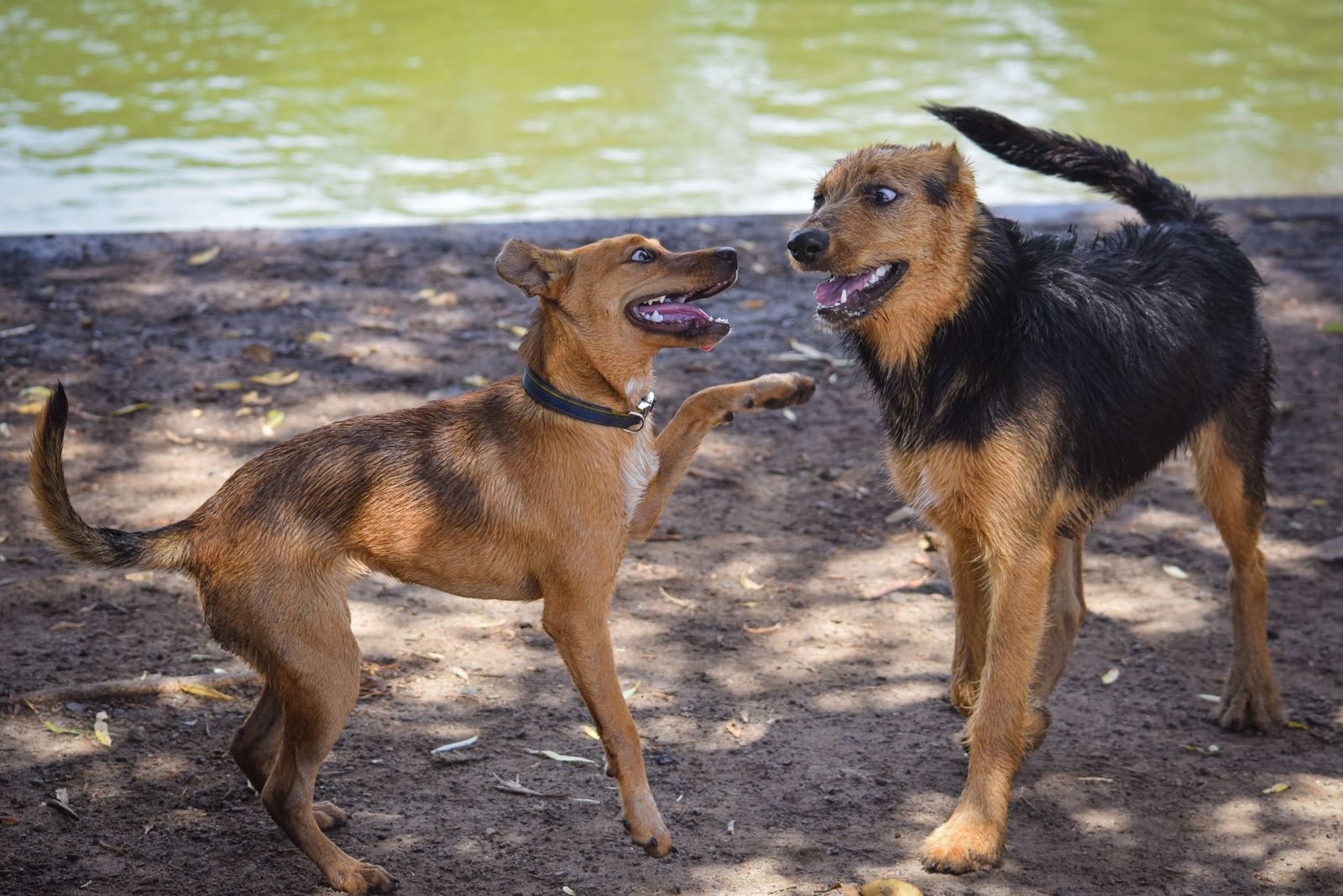
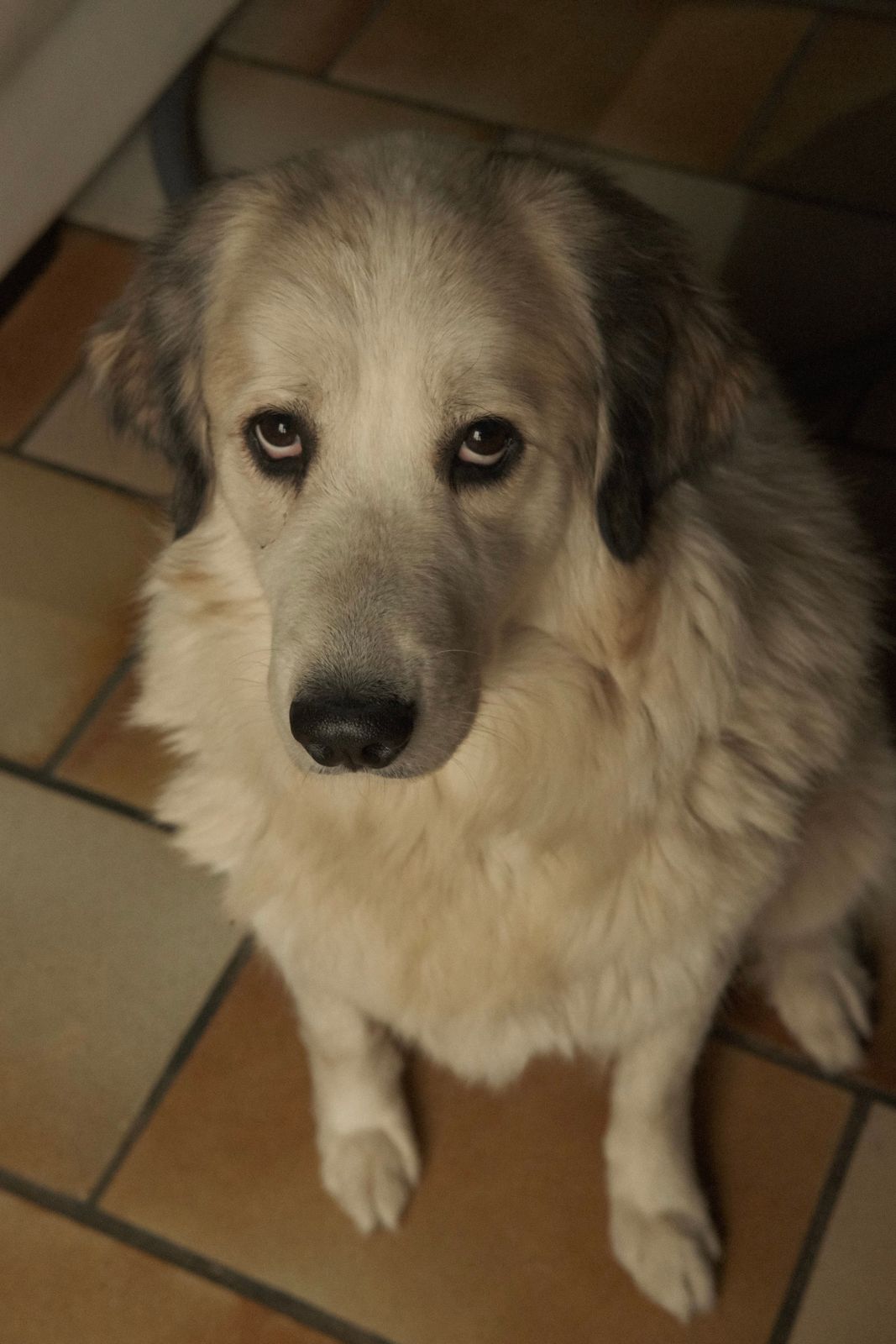
Glued to your leg is the one I most want owners to learn. A dog who suddenly presses into your leg, tucks behind you or will not leave your side is often looking for cover because they have run out of other options. It is easy to enjoy that as a bonding moment while the dog is asking to leave.
Dogs who are harder to read
Short or docked tails, flat faces, heavy skin folds and thick coats hide some signals. With these dogs, rely more on the ears, mouth, weight and movement.
| What the dog has | What it can hide | What to watch instead |
|---|---|---|
| A short or docked tail | Much of the wag | Ears, mouth, weight and movement |
| A flat face or heavy skin folds | Brow and mouth movements | Ears, weight and movement |
| A dark coat over the brow | Brow movements | Eyes, mouth, weight and movement |
| A long or dense coat | Raised hackles | Tail, mouth, weight and movement |
| A tail curled over the back | Tail height, since the tail always sits high | How the tail sits compared with that dog’s normal |

When the change is sudden
If your dog suddenly starts showing signals they never used to, see a veterinarian before a trainer.
Behavior clinicians report that pain plays a part in many of the behavior cases sent to them, and in most clinics it is more than half. I am not a veterinarian, and nothing here replaces one.
| What changes | What you might notice |
|---|---|
| Movement | Stiffness, a change in how they walk, reluctance to jump or to walk on certain floors |
| Resting | Sitting or lying in odd positions, restlessness, frequent repositioning |
| Licking | Licking one part of the body over and over, or licking surfaces |
| Mood | Changes in mood, or in how they get along with people and other dogs |
| Face | Squinting, flattened ears, lips drawn back |
In some breeds, these signs get written off as normal for the breed, so they are easy to miss.
What to do with what you see
Act on the earliest signals you see by giving your dog more distance from whatever is bothering them.
Trainers call whatever is bothering a dog the trigger. A dog who is below threshold can notice the trigger and still listen to you, take a treat and walk away with you. A dog who is over threshold, usually by the time they are barking or lunging, mostly cannot. The small signals tend to appear while a dog is still below threshold, which is why they are the ones worth acting on.
| What you see | What to do |
|---|---|
| A lip lick, a head turn, slowing down | Add distance now, while your dog can still listen and take food |
| Turning away, moving off, hiding behind you | Let them leave, and help them do it |
| Stiffening, freezing, a hard stare | Stop any petting, holding or leaning over the dog, and calmly make space |
| A growl or a snap | Stop what is happening and give space, without punishing the warning |
To make space, cross the road, turn around, step behind a parked car, or stand between your dog and the trigger.
If this is all new to you, start with one signal. Pick one and watch for it until you notice it without trying. Lip licking is a good first choice because it is easy to spot once you know it.
In my experience, a dog whose small signals get them space keeps using them. A dog whose small signals get ignored stops using them, and starts going straight to the bigger ones.
Sources
- Wan M, Bolger N, Champagne FA (2012). Human perception of fear in dogs varies according to experience with dogs. PLoS ONE 7(12):e51775
- Pedretti G, Canori C, Biffi E, Marshall-Pescini S, Valsecchi P (2023). Appeasement function of displacement behaviours? Dogs’ behavioural displays exhibited towards threatening and neutral humans. Animal Cognition
- Bremhorst A, Mills DS, Würbel H, Riemer S (2022). Evaluating the accuracy of facial expressions as emotion indicators across contexts in dogs. Animal Cognition 25(1):121-136
- Beerda B, Schilder MBH, van Hooff JARAM, de Vries HW, Mol JA (1998). Behavioural, saliva cortisol and heart rate responses to different types of stimuli in dogs. Applied Animal Behaviour Science 58(3-4):365-381
- Hiby EF, Rooney NJ, Bradshaw JWS (2006). Behavioural and physiological responses of dogs entering re-homing kennels. Physiology & Behavior 89(3):385-391
- Csoltova E, Mehinagic E (2020). Where do we stand in the domestic dog positive-emotion assessment: a state-of-the-art review and future directions. Frontiers in Psychology 11:2131 Both authors employed by a pet-food company
- Caeiro C, Guo K, Mills D (2017). Dogs and humans respond to emotionally competent stimuli by producing different facial actions. Scientific Reports 7:15525
- Molinaro HG, Wynne CDL (2025). Barking up the wrong tree: human perception of dog emotions is influenced by extraneous factors. Anthrozoös
- Mariti C, Gazzano A, Moore JL, Baragli P, Chelli L, Sighieri C (2012). Perception of dogs’ stress by their owners. Journal of Veterinary Behavior 7(4):213-219
- Grigg EK, Chou J, Parker E, Gatesy-Davis A, Clarkson ST, Hart LA (2021). Stress-related behaviors in companion dogs exposed to common household noises, and owners’ interpretations of their dogs’ behaviors. Frontiers in Veterinary Science 8
- Salgirli Demirbas Y, Ozturk H, Emre B, Kockaya M, Ozvardar T, Scott A (2016). Adults’ ability to interpret canine body language during a dog-child interaction. Anthrozoös 29(4):581-596
- Siniscalchi M, d’Ingeo S, Minunno M, Quaranta A (2018). Communication in dogs. Animals 8(8):131
- Mariti C, Falaschi C, Zilocchi M, Fatjó J, Sighieri C, Ogi A, Gazzano A (2017). Analysis of the intraspecific visual communication in the domestic dog: a pilot study on the case of calming signals. Journal of Veterinary Behavior 18:49-55
- Byosiere S-E, Espinosa J, Smuts B (2016). Investigating the function of play bows in adult pet dogs. Behavioural Processes 125:106-113
- Bekoff M (1995). Play signals as punctuation: the structure of social play in canids. Behaviour 132(5-6):419-429
- Horowitz A (2009). Attention to attention in domestic dog dyadic play. Animal Cognition 12(1):107-118
- Ward C, Bauer EB, Smuts BB (2008). Partner preferences and asymmetries in social play among domestic dog littermates. Animal Behaviour 76(4):1187-1199
- Flint HE, Weller JE, Parry-Howells N, Ellerby ZW, McKay SL, King T (2024). Evaluation of indicators of acute emotional states in dogs. Scientific Reports 14:6406 Funded by a pet-food company; all authors its employees
- Döring D, Roscher A, Scheipl F, Küchenhoff H, Erhard MH (2009). Fear-related behaviour of dogs in veterinary practice. The Veterinary Journal 182(1):38-43
- Kuhne F, Hößler JC, Struwe R (2014). Behavioral and cardiac responses by dogs to physical human-dog contact. Journal of Veterinary Behavior 9(3):93-97
- Csoltova E, Martineau M, Boissy A, Gilbert C (2017). Behavioral and physiological reactions in dogs to a veterinary examination: owner-dog interactions improve canine well-being. Physiology & Behavior 177:270-281
- Stellato AC, Dewey CE, Widowski TM, Niel L (2020). Evaluation of associations between owner presence and indicators of fear in dogs during routine veterinary examinations. JAVMA 257(10):1031-1040
- Ciribassi J (2017). Fear-based aggression in dogs. CVC proceedings, dvm360
- Haug LI (2009). Canine aggression toward unfamiliar people and dogs (proceedings). dvm360
- Bradshaw JWS, Blackwell EJ, Casey RA (2009). Dominance in domestic dogs: useful construct or bad habit? Journal of Veterinary Behavior 4(3):135-144
- Owczarczak-Garstecka SC, Watkins F, Christley R, Westgarth C (2018). Online videos indicate human and dog behaviour preceding dog bites and the context in which bites occur. Scientific Reports 8:7147
- Reisner IR, Shofer FS, Nance ML (2007). Behavioral assessment of child-directed canine aggression. Injury Prevention 13(5):348-351
- Reisner IR, Nance ML, Zeller JS, Houseknecht EM, Kassam-Adams N, Wiebe DJ (2011). Behavioural characteristics associated with dog bites to children presenting to an urban trauma centre. Injury Prevention 17(5):348-353
- Taylor AM, Reby D, McComb K (2009). Context-related variation in the vocal growling behaviour of the domestic dog. Ethology 115(10):905-915
- McPeake KJ, Collins LM, Zulch H, Mills DS (2019). The Canine Frustration Questionnaire. Frontiers in Veterinary Science 6:152
- Shnookal J, Clay L, Howell T, Bennett P (2025). Exploring trainer insights and understanding of on-lead dog aggressive behaviours and behavioural modification advice. Discover Animals 2:59
- Leonetti S, Cimarelli G, Hersh TA, Ravignani A (2024). Why do dogs wag their tails? Biology Letters 20(1):20230407
- Quaranta A, Siniscalchi M, Vallortigara G (2007). Asymmetric tail-wagging responses by dogs to different emotive stimuli. Current Biology 17(6):R199-R201
- Siniscalchi M, Lusito R, Vallortigara G, Quaranta A (2013). Seeing left- or right-asymmetric tail wagging produces different emotional responses in dogs. Current Biology 23(22):2279-2282
- Horowitz A (2009). Disambiguating the "guilty look": salient prompts to a familiar dog behaviour. Behavioural Processes 81(3):447-452
- Ostojić L, Tkalčić M, Clayton NS (2015). Are owners’ reports of their dogs’ "guilty look" influenced by the dogs’ action and evidence of the misdeed? Behavioural Processes 111:97-100 A pet-food company donated a camera and treats
- Joly-Mascheroni RM, Senju A, Shepherd AJ (2008). Dogs catch human yawns. Biology Letters 4(5):446-448
- Romero T, Konno A, Hasegawa T (2013). Familiarity bias and physiological responses in contagious yawning by dogs support link to empathy. PLoS ONE 8(8):e71365
- Harr AL, Gilbert VR, Phillips KA (2009). Do dogs show contagious yawning? Animal Cognition 12(6):833-837
- O’Hara SJ, Reeve AV (2011). A test of the yawning contagion and emotional connectedness hypothesis in dogs. Animal Behaviour 81(1):335-340
- Leaver SDA, Reimchen TE (2008). Behavioural responses of Canis familiaris to different tail lengths of a remotely-controlled life-size dog replica. Behaviour 145(3):377-390
- Mota-Rojas D, Marcet-Rius M, Ogi A, et al. (2021). Current advances in assessment of dog’s emotions, facial expressions, and their use for clinical recognition of pain. Animals 11(11):3334
- Mills DS, Demontigny-Bédard I, Gruen M, et al. (2020). Pain and problem behavior in cats and dogs. Animals 10(2):318
- Reid J, Nolan AM, Hughes JML, Lascelles D, Pawson P, Scott EM (2007). Development of the short-form Glasgow Composite Measure Pain Scale (CMPS-SF). Animal Welfare 16(S):97-104
- Troisi A (2002). Displacement activities as a behavioral measure of stress in nonhuman primates and human subjects. Stress 5(1):47-54
- Albuquerque N, Guo K, Wilkinson A, Resende B, Mills DS (2018). Mouth-licking by dogs as a response to emotional stimuli. Behavioural Processes 146:42-45
- Rehn T, Keeling LJ (2011). The effect of time left alone at home on dog welfare. Applied Animal Behaviour Science 129(2-4):129-135
- Pedretti G, Canori C, Costantini E, Palme R, Valsecchi P, Marshall-Pescini S (2024). Intra and interspecific audience effect on domestic dogs’ behavioural displays and facial expressions. Scientific Reports 14:9546
- Capitain S, Wirobski G, Önsal Ç, Pedretti G, Bevilacqua V, Marshall-Pescini S, Range F (2025). Differences in dogs’ and wolves’ human-directed greeting behaviour: facial expressions, body language, and the problem of human biases. Animal Cognition 28:54
- Norman K, Pellis S, Barrett L, Henzi SP (2015). Down but not out: supine postures as facilitators of play in domestic dogs. Behavioural Processes 110:88-95
- Pongrácz P, Molnár C, Miklósi Á, Csányi V (2005). Human listeners are able to classify dog (Canis familiaris) barks recorded in different situations. Journal of Comparative Psychology 119(2):136-144
Photographs
- Figure 8: Kseniya Kobi, Pexels
- Figure 9: Matt Barnard, Pexels
- Figure 13: Gabe’s Photos, Pexels