
The one move for when your dog lunges
Corrections aren't evil, but they're not your move here. When your dog's already over the edge, you want one reliable safety net: the emergency U-turn.
Quick Links
As an Amazon Associate I earn from qualifying purchases. Some links in this note are affiliate links, at no extra cost to you.
When your dog is lunging and barking at the end of the leash, every instinct you have is screaming to correct it. Yank the leash, say "no," pop the collar, make it stop. I get it. It's loud and embarrassing and you want it over. But here's what I walk every owner through before they reach for a correction in that moment: it only ends two ways, and neither is the one you want. Either your dog shrugs the correction off and quietly learns it can do this forever, or the correction pours fuel on an already-flooded dog and tips it into something worse. That's it. Those are your two outcomes. So right then, correcting isn't the move. A plan you built ahead of time is.
The move: get attention, then leave
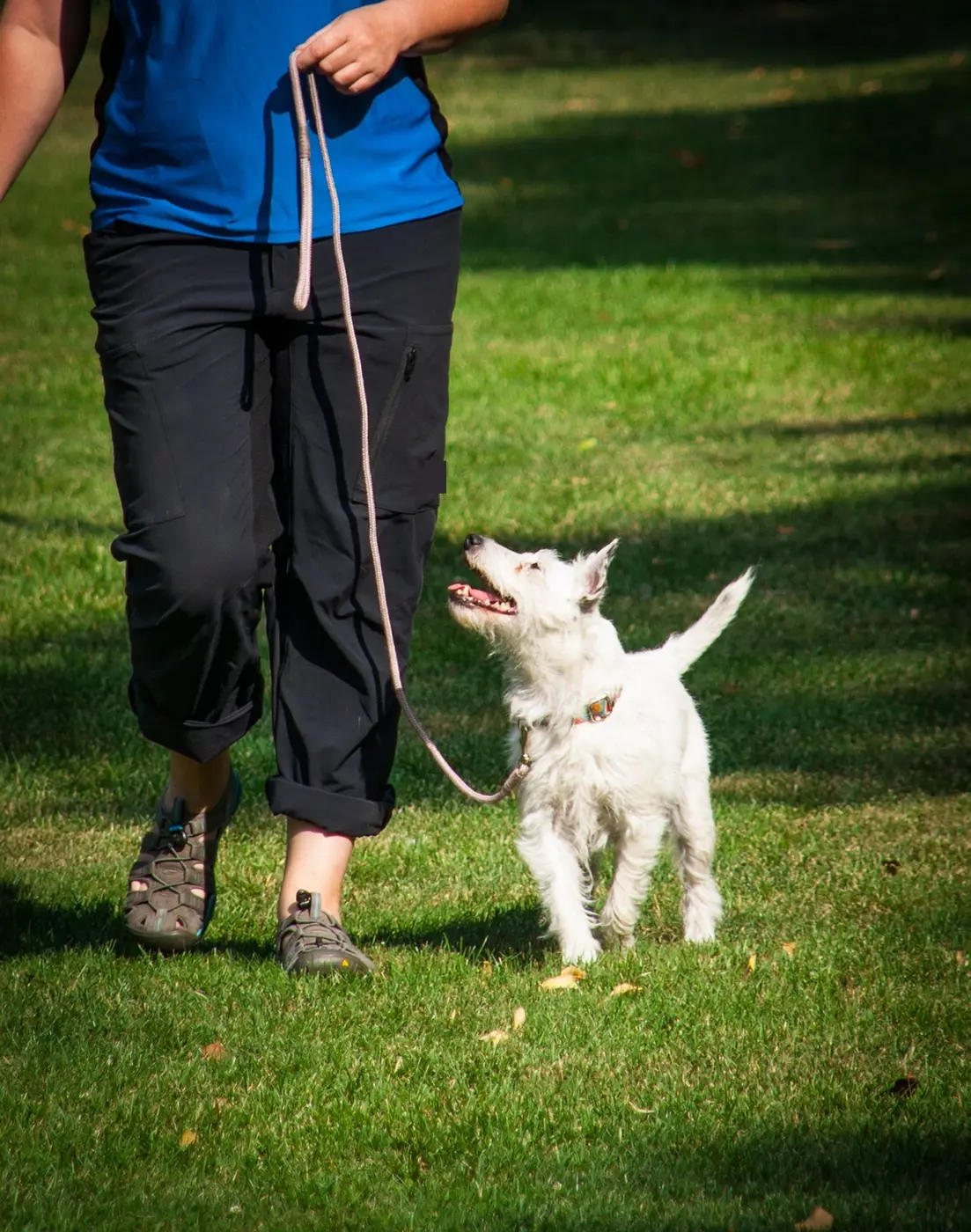
That plan is the emergency U-turnA trained cue that turns a dog and handler around and moves them away from something before it becomes a problem.Read more →, and I mean the emergency part. It's exactly what it sounds like: you get your dog's attention fast and you leave, briskly, in the other direction. The first time you do it you'll feel a little ridiculous, marching away from nothing. Do it anyway. It's the single best safety tool I can hand you, because it gets your dog out of a bad spot before it boils over, and it does it without a fight. No standoff, no escalation, nobody digging in.
And it's more than an escape hatch, it's teaching, too. Most reactive lunging is really a dog trying to create space: make the scary thing go away, or get themselves away from it. So when you turn and calmly leave, you're giving your dog the exact thing they were barking to get, except now they're getting it the easy way. The distance is the reward. You're not overriding the instinct, you're beating them to it.
Build it before you ever need it
Here's the part that makes or breaks it: you do not teach this on a real trigger. You build it at home, with nothing on the line.
- Pick a word you'll only ever use for this one move. "Uh-oh," "this way," whatever you like, as long as you say it like you mean it.
- Teach the word to mean one thing: food is coming. Say the word, feed a treat(affiliate link). Say it, feed. Again and again, until the word by itself snaps your dog's head around to you.
- Clip the leash on and wander the house like it's the most boring thing in the world. Then out of nowhere, spin, change direction, say your word, and pay up.
- When that's easy, jog a few steps as you go and let the treat come a beat later.
And here's a small thing I use on purpose: when you turn away suddenly, a little leash pressure shows up on its own, and instead of fighting it, you let it become part of the cue. Not a yank, not a correction, just the natural pull of the turn. The word, the turn, that bit of pressure, and "the good stuff is this way" all blur into one automatic response your dog doesn't have to stop and think about.
Then, and only then, outside
And only now, once it's smooth and silly-easy in a boring living room, do you take it outside and use it when a trigger actually shows up. That's the order that makes it bombproof. When it finally counts, your dog isn't weighing options or locking onto the other dog. They just turn and go with you, and you're both moving away before anyone crosses a line.
The goal was never to win the standoff at the end of the leash. It was to skip it entirely.
Common questions
What is an emergency U-turn in dog training?
It's exactly what it sounds like: you get your dog's attention fast with a word you use only for this, and you leave, briskly, in the other direction. It gets a reactive dog out of a bad spot before it boils over, without a standoff. For most reactive dogs, the distance it creates is exactly what they were barking to get.
Should I correct my dog for lunging on the leash?
Not in that moment. A correction while your dog is lunging only ends two ways: either they shrug it off and learn they can keep doing it, or it pours fuel on an already-flooded dog and tips them into something worse. A plan you built ahead of time, like an emergency U-turn, is the better move.
How do I teach my dog an emergency U-turn?
Build it at home, never on a real trigger. Pick a word, then say it and feed a treat, over and over, until the word alone snaps your dog's head around. Then wander the house on leash, spin suddenly, say the word and pay up. Only once it's easy indoors do you take it outside.

Kourtenay Dolmos
Founder, Hearth & Hounds · LIMA-Informed · Houston, TXKourtenay is the trainer behind Hearth & Hounds, working hands-on with reactive, anxious, and rescue dogs across Houston. These notes come straight from that everyday work.
Work with KourtenayWhat "threshold" actually means
Trainers throw this word around constantly. It actually means two things at once, and once you can see both, your dog's reactive walks start to make a lot more sense.
TrainingHow to tell if training is actually working
The progress is real, it's just not where you're looking. Often the exact thing that feels like failure is the win.
ReactivityTrigger Stacking: When Small Stressors Add Up
Your dog's stress doesn't reset to zero between one trigger and the next. It stacks, and eventually something small tips the whole thing over.
Working through this with your dog?
This is the everyday stuff. If you want a plan built for your dog specifically, that's what we do in person.
Get in touch →