
What "threshold" actually means
Trainers throw this word around constantly. It actually means two things at once, and once you can see both, your dog's reactive walks start to make a lot more sense.
Quick Links
As an Amazon Associate I earn from qualifying purchases. Some links in this note are affiliate links, at no extra cost to you.
First, I get it. A dog coming apart at the end of the leash is embarrassing and exhausting and genuinely frustrating, and I sympathize with it every single time. But I almost always have to walk an owner back from the same two words: stubborn, and bad. Your dog is neither. Two separate things are usually going on, and neither one is defiance. The first is that in that moment your dog physically can't think. The second, which stings a little more to hear, is that a lot of the time they simply don't know any better yet, because nobody has put in the long, patient work of teaching them what to do instead. It isn't stubbornness. It's closer to ignorance, and ignorance is on us to fix, not the dog.
Take the first part, the can't-think part. That's where thresholdThe point at which a dog stops being able to think clearly about what is happening around them.Read more → comes in, a word I use in nearly every session. Picture a thermometer. The closer a trigger gets, the closer that other dog, that scooter, that jogger, the higher your dog's temperature climbs, until it crosses their own line, wherever that sits, and the thinking brain just clocks out. Not won't. Can't. Past that line, food doesn't land, cues don't land, and a correction sure doesn't land, because there's nobody home to receive any of it. So the honest first move is to curb your expectations a little. A dog over threshold isn't a dog who's about to learn something. It's a dog you need to make some room for, first.
Not won't. Can't.
It's rarely just one dog
And here's why a walk can feel so random. It's almost never just the one dog. Trainers call it trigger stackingThe build-up that happens when stressful events land close enough together that a dog has not recovered from one before the next arrives.Read more →: the garbage truck at 7am, the kid who tore past on a scooter, a short night's sleep, a dog barking behind a fence three houses back. None of it is a big deal on its own, and none of it fully resets. It stacks. That's how your dog strolls past ten dogs like an angel and then comes undone at the eleventh, and you're left standing there baffled about what was so special about number eleven. Nothing was. The tank was already full.
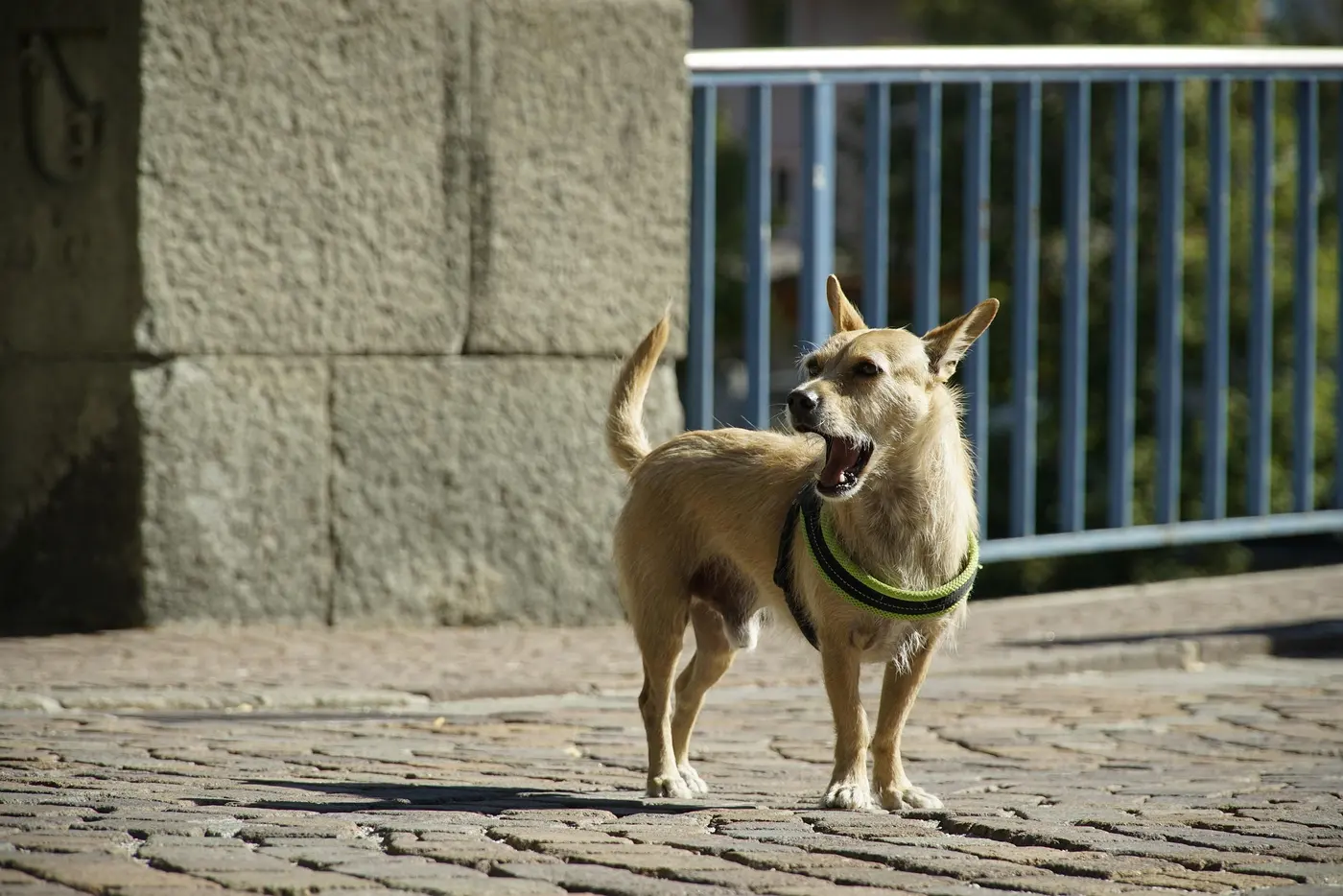
The upside is your dog shows you the whole climb, if you know what to watch for. Long before the bark, I'm reading the quiet stuff:
- The head locks onto a target and won't come off it
- The body goes stiff and slow
- A mouth that was loose suddenly clamps shut
- A fast little lick of the lips
- Sniffing the ground hard, out of nowhere
- The big one: your dog stops being able to hear you. You say their name and you may as well be a mailbox.
That's not attitude. That's the thermometer showing you the number.
So what do you actually do about it?
So you don't work at the edge. You back off to where your dog can still think, still eat, still turn and find your face, and that's where the real teaching happens, the part that fixes the ignorance. My go-to is LATLeslie McDevitt's Look At That game, in which a dog is marked and reinforced for looking at a trigger and then back at their handler.Read more →, "look at that": the dog looks at the trigger, then chooses to look back at you, and that check-in is what gets paid. What you pay with depends on the dog. Early on it might be a fistful of freeze-dried training treats(affiliate link) tossed in the grass, or just marking the look and calmly walking away, which is the heart of BATBehavior Adjustment Training, Grisha Stewart's protocol in which a dog on a long line chooses whether to approach or move away from a trigger, and the distance itself functions as the reward.Read more →, Behavior Adjustment Training. Later it can be a cued behavior, a long sniff, a little play. Same game every time. Only the currency changes, and your dog decides what it's worth, not you.
And this is where it's all headed, which catches most people off guard: the goal was never to make other dogs mean "good" to your dog. It's to make them mean almost nothing. I don't want your dog thrilled to see another dog any more than I want them scared. I want a shrug. You just can't jump a frightened dog straight to a shrug. First you make the scary thing genuinely good, and then you let good fade into boring. Scary, to safe, to background noise. That's the whole job. Threshold is just how we stay on the one step your dog can actually pull off today.
Common questions
What does threshold mean in dog training?
Threshold is the point where a reactive dog gets so worked up by a trigger that their thinking brain clocks out. Picture a thermometer: the closer the trigger gets, the higher it climbs, until it crosses that dog's own line, which sits in a different place for every dog. Past it, food doesn't land, cues don't land, and a correction doesn't land either. Not won't. Can't.
How can I tell my dog is getting close to threshold?
Long before the bark, watch the quiet signs: the head locks onto a target and won't come off it, the body goes stiff and slow, a loose mouth clamps shut, a quick lick of the lips, sudden hard sniffing at the ground, and the big one, your dog can no longer hear you say their name.
What should I do when my dog is over threshold?
Make room first. A dog over threshold isn't about to learn anything, so back off to where they can still think, still eat, and still turn to find your face. That is where the real teaching happens, with games like LAT, look at that, where your dog looks at the trigger and then checks back in with you.
Is my reactive dog being stubborn?
No. In the moment, a dog coming apart at the end of the leash physically can't think, and a lot of the time they haven't been taught what to do instead yet. That isn't stubbornness or defiance. It's closer to not knowing any better, and that part is ours to fix.

Kourtenay Dolmos
Founder, Hearth & Hounds · LIMA-Informed · Houston, TXKourtenay is the trainer behind Hearth & Hounds, working hands-on with reactive, anxious, and rescue dogs across Houston. These notes come straight from that everyday work.
Work with KourtenayThe one move for when your dog lunges
Corrections aren't evil, but they're not your move here. When your dog's already over the edge, you want one reliable safety net: the emergency U-turn.
BehaviorWhy your dog is great at home but a mess outside
Spoiler: it isn't stubbornness, and it isn't really even a training problem. Your dog is an animal in a distracting world, and once you get that, a lot of this stops being so frustrating.
ReactivityTrigger Stacking: When Small Stressors Add Up
Your dog's stress doesn't reset to zero between one trigger and the next. It stacks, and eventually something small tips the whole thing over.
Working through this with your dog?
This is the everyday stuff. If you want a plan built for your dog specifically, that's what we do in person.
Get in touch →