
Trigger Stacking: When Small Stressors Add Up
Your dog's stress doesn't reset to zero between one trigger and the next. It stacks, and eventually something small tips the whole thing over.
Quick Links
As an Amazon Associate I earn from qualifying purchases. Some links in this note are affiliate links, at no extra cost to you.
You know your dog. You know more or less what sets them off. So when a walk goes sideways over something that's never been a big deal before, a jogger going by, a delivery truck, a dog three houses down, it's confusing. Nothing about today looked any different than yesterday. Except something was different. You just couldn't see it.
The baseline, not the trigger
I think about it like a temperature gauge. Every dog wakes up with a baseline stress level, and that baseline isn't the same dog to dog. A dog who doesn't carry a lot of stress day to day starts low. A dog dealing with real anxiety, or a behavioral case, the kind I work with most, can start the day already higher up the gauge than you'd guess just looking at them.
Here's the part that trips people up: that gauge doesn't reset every time something stressful happens. When your dog hits a triggerAnything that reliably produces a strong emotional response in a particular dog.Read more →, the needle jumps. Given enough time and space, it's supposed to come back down to that starting baseline. Stress hormonesAdrenaline and cortisol, the chemicals released when an animal responds to something stressful.Read more → don't clear out of the body in a few seconds either, so a dog that looks calm again ten minutes after a scare may still be carrying more of it internally than you'd think. If the next trigger shows up before that recoveryHow quickly a dog returns to normal after reacting to something.Read more → actually finishes, the needle doesn't drop all the way back down. It settles higher than where it started.
Do that enough times in one walk, in one day, and your dog isn't reacting to the thing in front of them anymore.
They're reacting to everything that came before it too.
A rescue dog named Stinky
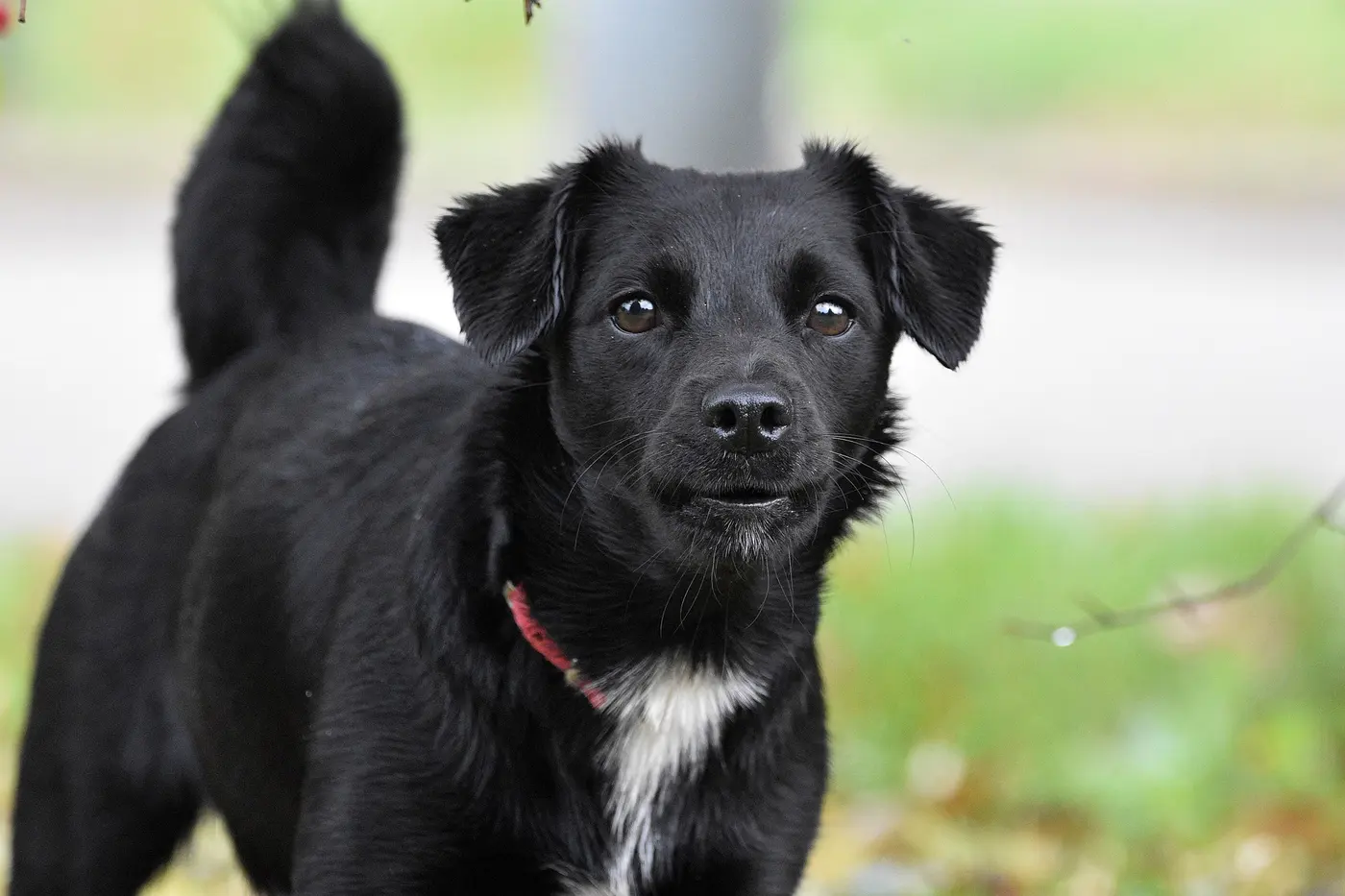
Stinky made this impossible to miss. She was a rescue in foster care, and I worked with her and her foster on a regular basis to get her ready to be adopted out. She was a real reactivityAn outsized response, such as barking, lunging or spinning, to an everyday thing that most dogs pass without comment.Read more → case, so we had to keep her sessions short and deliberate, because one trigger too many and she was gone, no getting her back that day. The stacking didn't even wait for the official walk to start. If she spotted a dog anywhere between her foster's apartment door and the block we actually trained on, her baseline was already climbing before we'd done a single thing on purpose.

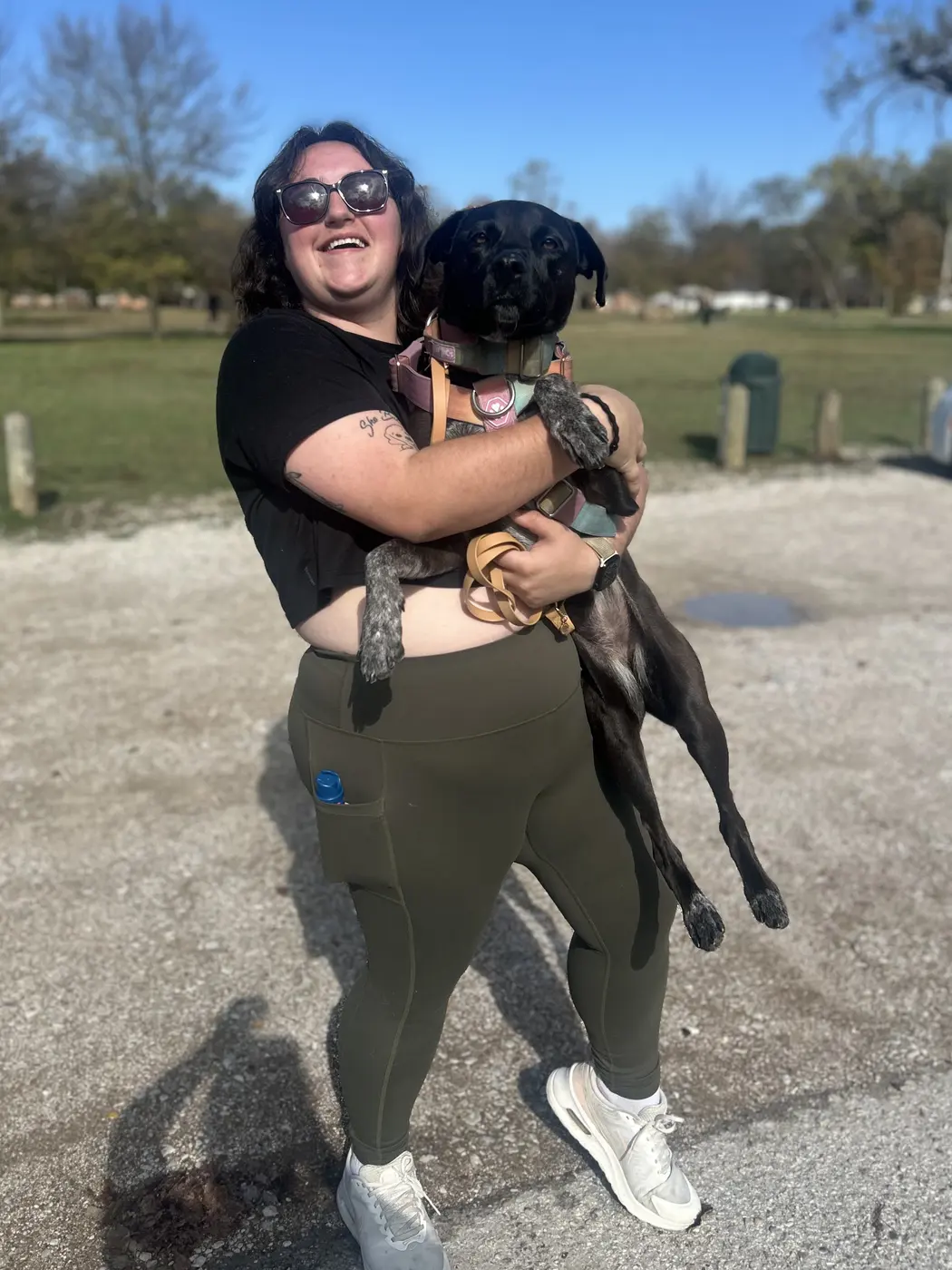
It took about a year of that work to get her to a place where she could recover fast enough to actually function out in the world. She got adopted after that. I drove up to Dallas and back in one day to meet her adopter with her foster and see her off. That's the part worth sitting with: this is fixable. It just isn't fixed by pushing through it.
Give the recovery time to actually finish
The instinct once you notice stacking is to get your dog out of there, and that instinct is right, distance helps. Here's the mistake almost everyone makes anyway: they pull their dog away, wait until the dog looks about half calm, and go right back to it, or straight into the next thing on the agenda. That's the worst version of this. You've spent the recovery time without letting the recovery actually finish.
The dog needs a full recovery, not a partial one. That means getting far enough from whatever set them off that their body actually gets the message it's safe. Do that consistently and you're not just avoiding a bad day, you're building the skill itself: dogs who get real recovery time between stressors get better at recovering on their own, with less and less help from you. That's the actual goal. Once you're home, a snuffle mat(affiliate link) is an easy way to help them come down. Sniffing genuinely changes a dog's mood.
So next time a walk goes sideways over something that's never been a problem before, it's worth asking what happened earlier that day, not just what happened right before the reaction. The trigger in front of you is rarely the whole story. Give the recovery room to actually finish, and the dog in front of you starts looking a lot more like Stinky after a year: calm enough to just be a dog.
Common questions
What is trigger stacking in dogs?
Trigger stacking is what happens when stressful things arrive faster than your dog can recover from them. Each one pushes their stress up, and if the next arrives before they've come back down, they settle higher than where they started. Enough of that in one day and your dog is reacting to everything that came before the thing in front of them.
Why did my dog react to something that never bothered them before?
Usually because of what happened earlier, not what happened right before the reaction. A dog who has already met a few stressors that day may still be carrying them, so a jogger or a delivery truck that is normally no big deal becomes the last straw. The trigger in front of you is rarely the whole story.
How long does it take a dog to recover from stress?
Longer than it looks. A dog can seem calm again within minutes and still be carrying more of that stress than you'd think, and every surge leaves them quicker to react to the next thing. There's no set clock, so the practical rule is to give recovery room to actually finish before asking for anything else.
How do I help my dog recover after a stressful walk?
Get far enough from whatever set them off that their body gets the message it's safe, then wait for a full recovery before going back or moving on. A dog who looks half calm hasn't finished recovering. Once you're home, a snuffle mat helps them come down, because sniffing genuinely changes a dog's mood.

Kourtenay Dolmos
Founder, Hearth & Hounds · LIMA-Informed · Houston, TXKourtenay is the trainer behind Hearth & Hounds, working hands-on with reactive, anxious, and rescue dogs across Houston. These notes come straight from that everyday work.
Work with KourtenayWhat "threshold" actually means
Trainers throw this word around constantly. It actually means two things at once, and once you can see both, your dog's reactive walks start to make a lot more sense.
TrainingHow to tell if training is actually working
The progress is real, it's just not where you're looking. Often the exact thing that feels like failure is the win.
Working through this with your dog?
This is the everyday stuff. If you want a plan built for your dog specifically, that's what we do in person.
Get in touch →