
How to tell if training is actually working
The progress is real, it's just not where you're looking. Often the exact thing that feels like failure is the win.
As an Amazon Associate I earn from qualifying purchases. Some links in this note are affiliate links, at no extra cost to you.
The hardest part of reactivity work isn't the beginning. It's the middle. You've been at it for weeks, you're putting in the reps, and your dog is, in your eyes, still reactive. That's usually where someone tells me it isn't working. And almost every time, I'm looking at the same dog and seeing the opposite, because progress here rarely shows up as the barking suddenly stopping. It shows up in a handful of small things underneath the bark, and once you know where to look, you can't unsee them.
Watch for the pause
The first thing I watch is the pause. Early on, a reactive dog goes from zero to explosion with nothing in between: trigger appears, dog detonates, no gap. So when your dog starts to notice the other dog, freeze, stare for a couple of seconds, and then bark, that little window of hesitation is a genuinely big deal. It looks like nothing. It's actually your dog's thinking brain buying itself a moment before the emotional brain takes over. A few weeks ago there was no moment. Now there's a beat. That beat is where all the change eventually happens.
Then, the distance
Then there's distance, and this one's the clearest scoreboard there is. If a month ago your dog came apart at fifty feet and today they hold it together until thirty, that's not a lack of progress, that's the whole game moving in your favor, even if thirty feet still looks messy. That shrinking number is their threshold moving. And watch the shape of the reaction itself, not just whether it happened. A full-body lunge with snarling and snapping quietly shrinking into a single annoyed "boof" on a loose leash is enormous. Same triggerAnything that reliably produces a strong emotional response in a particular dog.Read more →, a fraction of the volume. That's the reaction losing its teeth.
Recovery, the one I trust most
The one I trust most, though, is recoveryHow quickly a dog returns to normal after reacting to something.Read more →: how fast your dog comes back down after a reaction, not whether one happened. Early on, a single trigger can wreck the whole outing, your dog panting, pacing, too wound up to take a treat for ten or twenty minutes. Later, they bark, and then they shake it off in seconds and re-engage with you. That drop in recovery time is one of the truest signs the work is landing, because it means the stress hormonesAdrenaline and cortisol, the chemicals released when an animal responds to something stressful.Read more → are clearing faster and the calm is coming back online sooner. It is also why a bad day stacks the way it does: recovery is the thing that stops it. And I watch your recovery too, honestly. A handler who used to spiral after a bad moment and now resets in a breath is every bit as much progress as the dog.
And the check-in
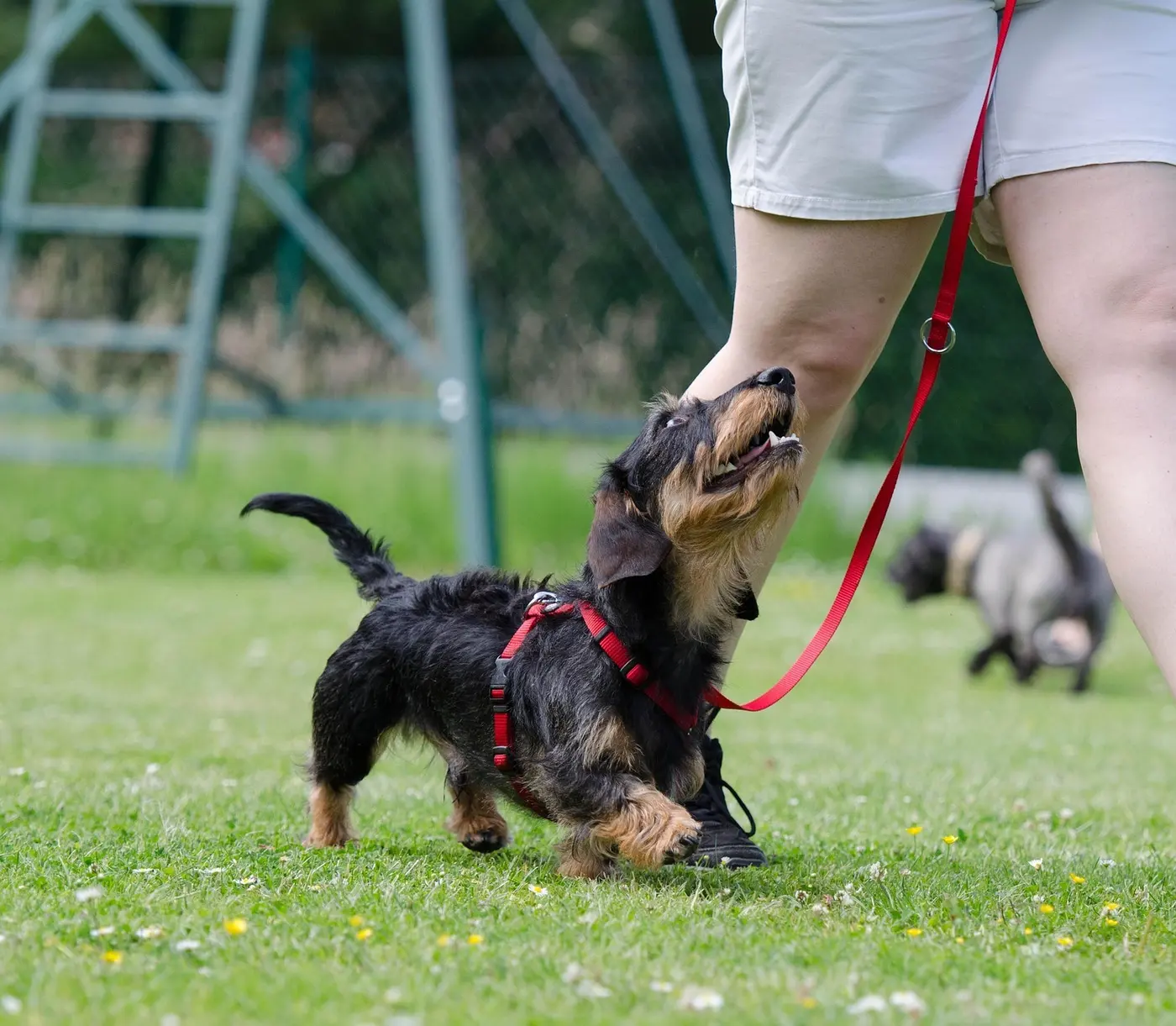
And then the one that always makes me grin: the check-inA dog noticing something that concerns them and then choosing, without being asked, to look back at their handler.Read more →. Early on your dog has full tunnel vision, no name, no treat, no leash can pull their eyes off the trigger. Progress is your dog glancing at the trigger and then, all on their own, turning to look at your face. Even if they look right back at the trigger, that half-second of choosing you was your dog's thinking brain flexing over the emotional one. It also means you both have a toolbox now. You've got more than one move, a U-turn, more distance, a game, and so does your dog, who's learned they can look at you instead of fixate. Choices, on both ends of the leash, are what calm actually looks like.
You're both beginners at this.
Here's the part that makes this hard and also matters most: you're learning right alongside your dog. You, learning to read a moment, time a reward from a clip-on treat pouch(affiliate link), and stay calm under pressure. Your dog, learning to trust that you'll handle it. That's a lot to carry at once, and it's exactly where the bond comes from. So if you feel stuck, don't judge the work by today's walk. Zoom out. Look at where you both were a month ago: the distances, the recovery, the number of tools you each reach for now without thinking. That's the real scoreboard, and almost every time, it's moved further than you thought.
Common questions
How do I know if my reactive dog is improving?
Progress rarely shows up as the barking stopping. Look underneath it: a pause before the reaction where there used to be none, a trigger getting closer before your dog reacts, a smaller reaction, a faster recovery afterward, and your dog checking in with you on their own. Judge it against where you both were a month ago.
How long does it take to see progress with a reactive dog?
It's measured in weeks and months, and the middle is the hardest part, because your dog can still look reactive while real change is happening. Compare against a month ago: if your dog reacted at fifty feet then and holds it together until thirty now, or used to need twenty minutes to calm down and now needs seconds, the work is landing.
What is the best sign that training is working?
Recovery: how fast your dog comes back down after a reaction, not whether one happened. Early on a single trigger can wreck a whole outing. Later, your dog barks, shakes it off in seconds, and re-engages with you. That shrinking recovery time is one of the truest signs the calm is coming back online sooner.

Kourtenay Dolmos
Founder, Hearth & Hounds · LIMA-Informed · Houston, TXKourtenay is the trainer behind Hearth & Hounds, working hands-on with reactive, anxious, and rescue dogs across Houston. These notes come straight from that everyday work.
Work with KourtenayWhat "threshold" actually means
Trainers throw this word around constantly. It actually means two things at once, and once you can see both, your dog's reactive walks start to make a lot more sense.
ReactivityThe one move for when your dog lunges
Corrections aren't evil, but they're not your move here. When your dog's already over the edge, you want one reliable safety net: the emergency U-turn.
ReactivityTrigger Stacking: When Small Stressors Add Up
Your dog's stress doesn't reset to zero between one trigger and the next. It stacks, and eventually something small tips the whole thing over.
Working through this with your dog?
This is the everyday stuff. If you want a plan built for your dog specifically, that's what we do in person.
Get in touch →